
Falkon Focus: Amazon advertising is projected to surpass $80 billion globally this year, but many brands still fail to measure one critical factor: who actually captures the sale. On Amazon, unauthorized sellers and rogue listings can intercept conversions generated by brand-funded advertising, creating hidden marketplace leakage that impacts Buy Box ownership, conversion rates, pricing stability, ROAS, incrementality, and customer trust. As retail media costs rise and Prime Day competition intensifies, Amazon brand protection and marketplace control are becoming essential growth levers — not just compliance initiatives. In this webinar recap, Gray Falkon explores how unauthorized sellers impact Amazon advertising efficiency, why modern brand control is breaking, and how brands like Cumberland Packing are improving ad performance and operational stability by removing rogue sellers and reclaiming control of their listings.
Retail media marketers are laser-focused on ROI, and Amazon advertising has become one of the most important growth engines in modern eCommerce. Retail media is now a top-three advertising channel globally, with Amazon ad revenue reaching approximately $68 billion last year and projected to surpass $80 billion this year. Brands are investing heavily in Sponsored Products, DSP, video, creator content, and retail media optimization strategies designed to drive incremental growth.
But there’s a question many brands still are not asking: Who is actually capturing the return on that investment?
That was the central theme of Gray Falkon’s recent webinar with Cleveland Research Company (CRC), exploring how unauthorized sellers are quietly undermining advertising efficiency on Amazon.
The conclusion was clear: Many brands are optimizing ad performance without fully controlling the conversion path.
Amazon Advertising Is Growing — But So Is Leakage
Most eCommerce and retail media teams are highly sophisticated at measuring spend. They track:
- Impressions
- Clicks
- Engagement
- CPCs
- ROAS
- Attribution metrics
But according to the webinar, one critical measurement gap remains: Who actually captures the sale?
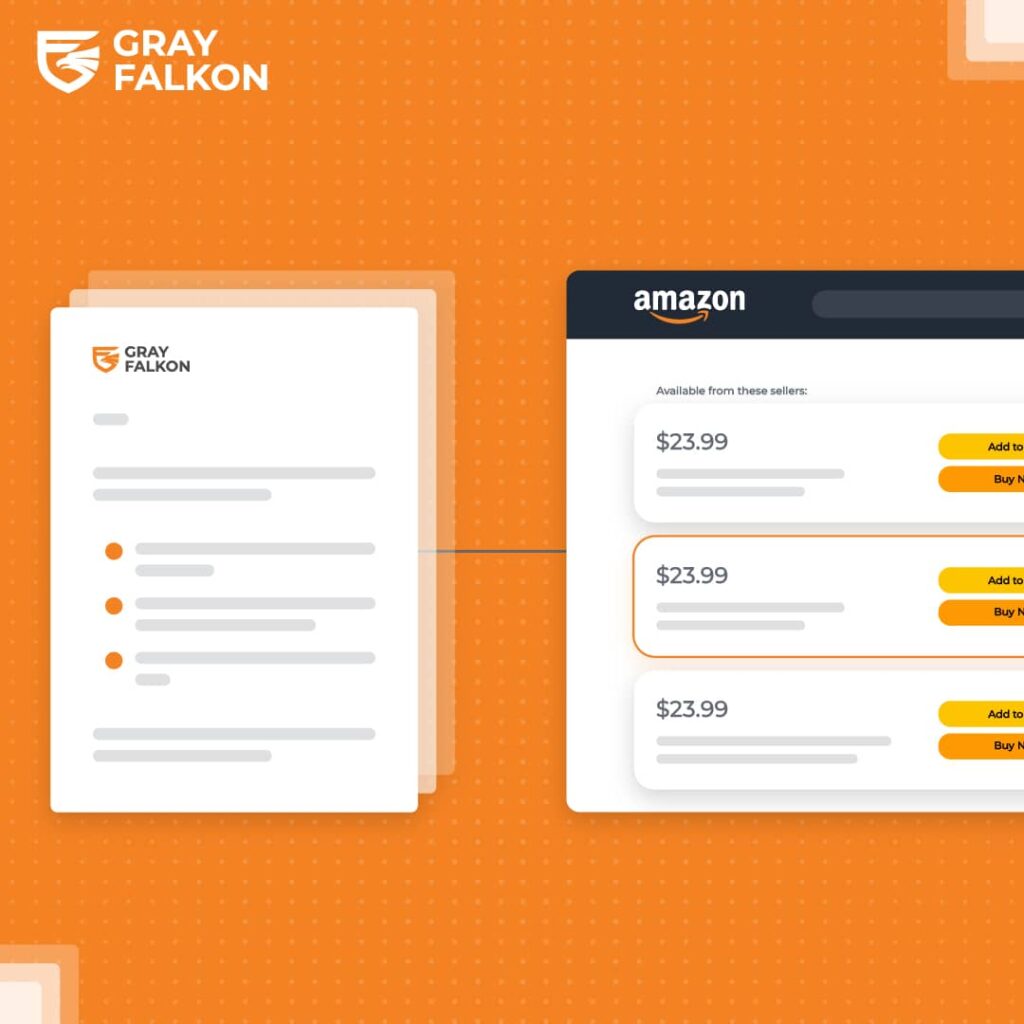
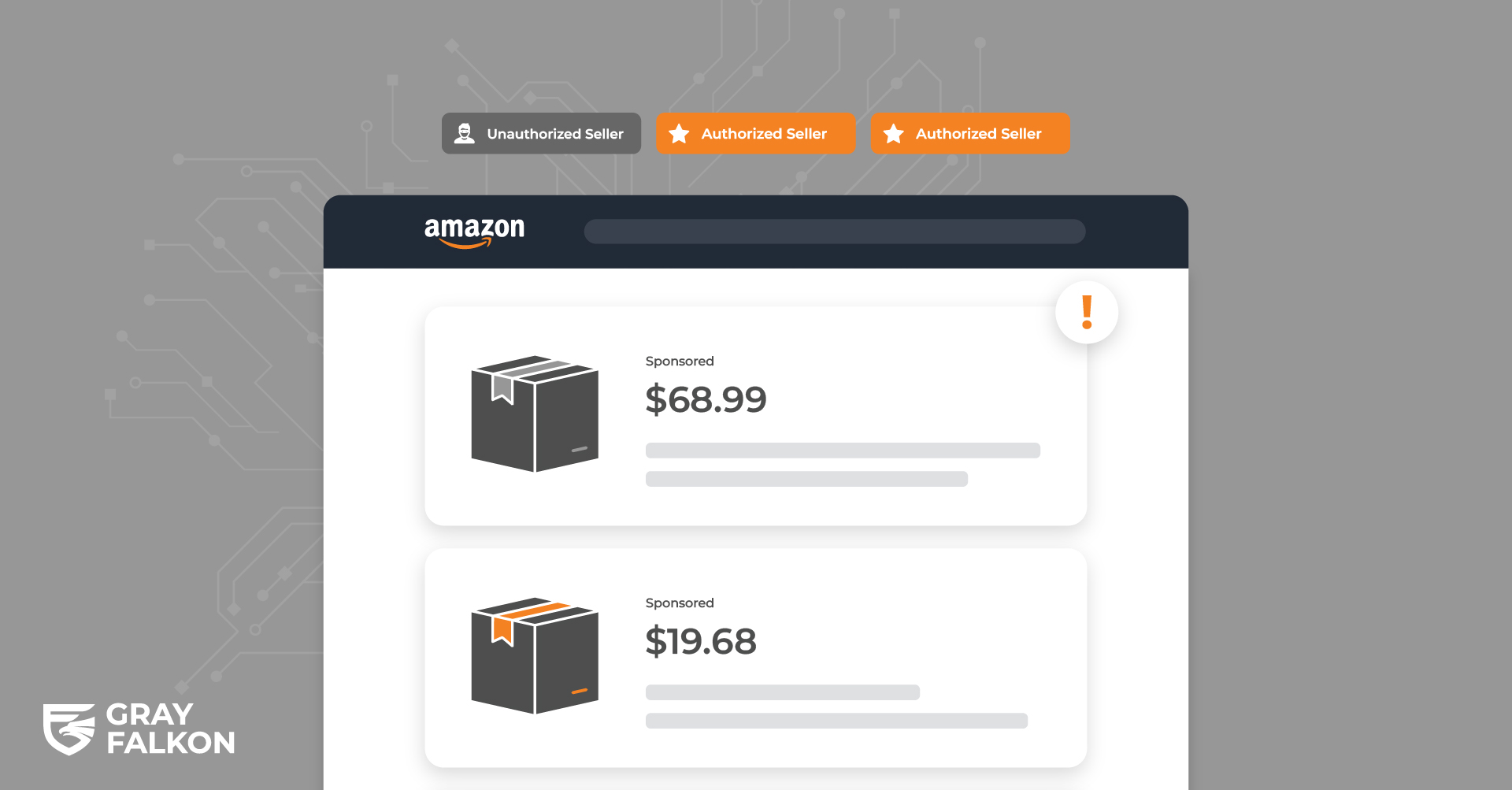
On Amazon, brands do not exclusively control their own product listings. Multiple sellers can attach to the same ASIN, compete for the Featured Offer (formerly Buy Box), and capture conversions generated by the brand’s own advertising campaigns. That creates what Gray Falkon’s CEO, Trajan Bayly described as “invisible leakage.” A customer clicks a brand-funded ad, lands on the product page, and ultimately purchases from:
- An unauthorized seller
- A reseller winning the Featured Offer
- A seller offering faster shipping
- Or even a duplicate unauthorized listing
The brand pays for the traffic. Someone else captures the conversion.
The Two Leakage Scenarios Brands Must Understand
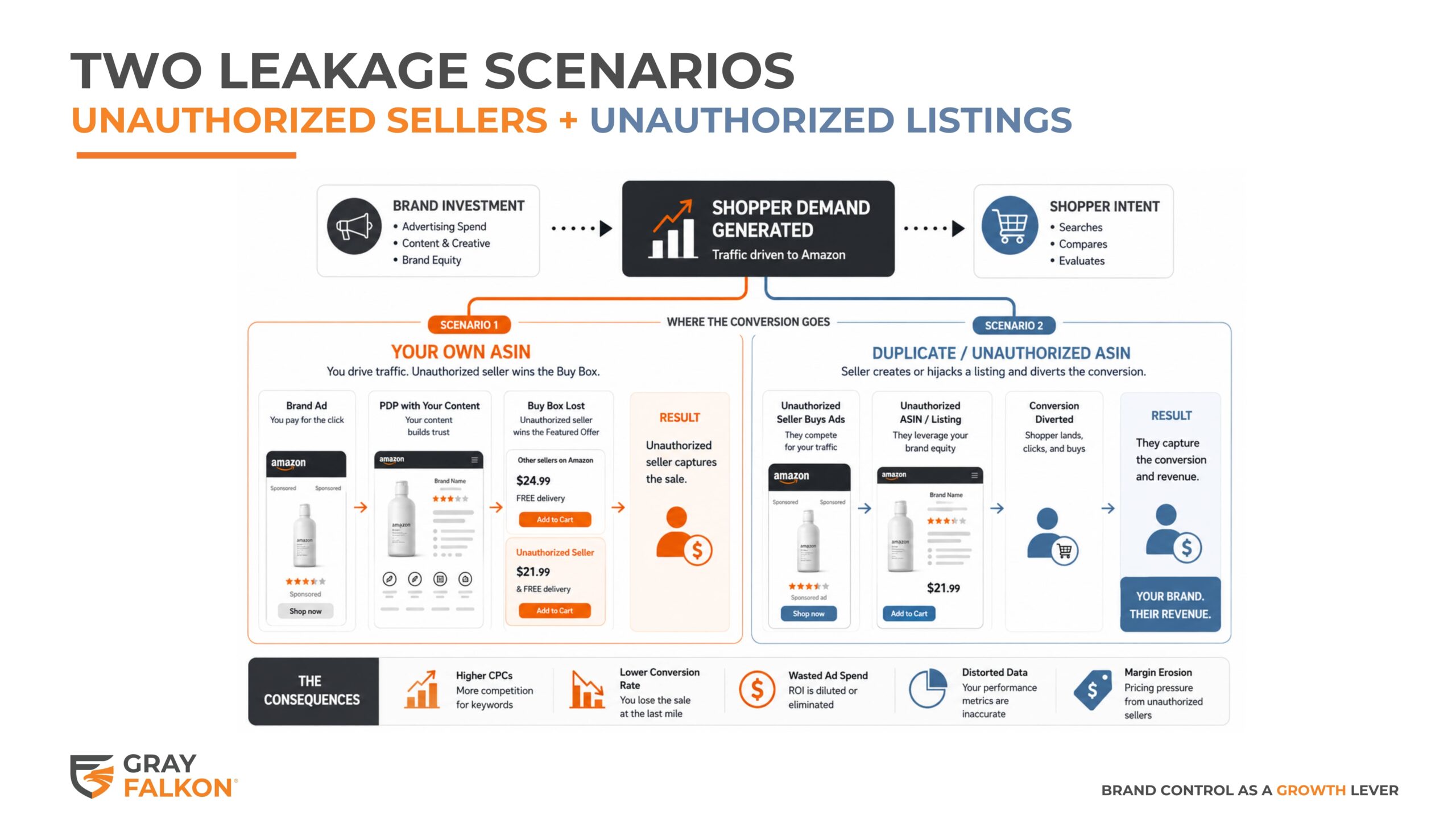
The webinar outlined two primary forms of marketplace leakage:
- Unauthorized Sellers on Existing ASINs: Third-party sellers attach themselves to legitimate product listings and compete for Buy Box ownership.
- Unauthorized Listings Using Brand Assets: Sellers create duplicate or unauthorized listings using brand content, imagery, and product information.
Both scenarios create operational and advertising consequences:
- Higher CPCs
- Lower conversion rates
- Wasted advertising spend
- Margin erosion
- Consumer trust issues
As Amazon advertising costs continue rising, these inefficiencies become increasingly expensive.
Why Brand Control Is Breaking on Amazon
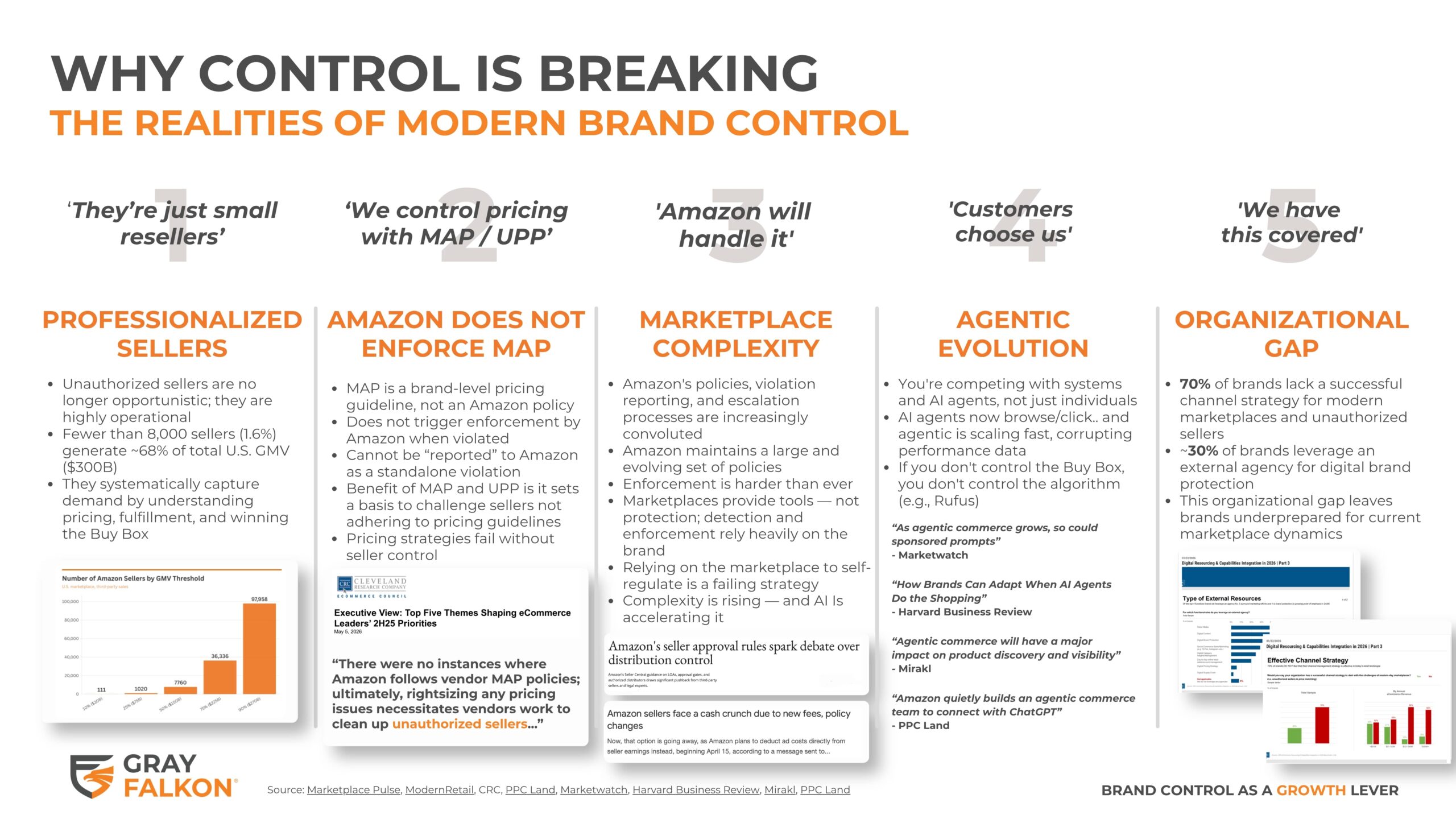
One of the webinar’s strongest sections focused on a broader industry shift: Modern brand control is fundamentally harder than it was just a few years ago. Gray Falkon identified five major realities reshaping marketplace enforcement.
1. Unauthorized Sellers Have Become Highly Sophisticated
Unauthorized sellers are no longer “small resellers.” They are operationally advanced businesses using:
- Automated repricing
- Fulfillment optimization
- Marketplace intelligence tools
- Buy Box strategies
- Multi-channel inventory systems
The webinar highlighted that a relatively small percentage of third-party sellers now control a disproportionate amount of Amazon marketplace sales. This is no longer a fragmented long-tail problem. It is a concentrated competitive environment.
2. Amazon Does Not Enforce MAP Policies
Many brands still approach pricing instability as a pricing strategy problem. But the webinar emphasized a harder truth: MAP policies alone do not stabilize Amazon pricing. Amazon does not enforce MAP pricing directly. As long as unauthorized sellers remain active:
- Pricing becomes volatile
- Promotions become inconsistent
- Buy Box ownership fluctuates
- Conversion rates become unstable
In other words: This is not just a pricing issue. It is a control issue.
3. Marketplace Complexity Continues to Increase
Amazon’s marketplace environment is becoming more operationally complex every year. The webinar referenced:
- Expanding policy frameworks
- Evolving reporting systems
- AI-driven shopping experiences
- Constant platform updates
- More nuanced enforcement processes
What once felt like straightforward enforcement has become highly strategic and operational.
4. Agentic Commerce Is Changing Marketplace Dynamics
One of the more forward-looking themes from the webinar involved AI-driven commerce behavior. AI agents are increasingly:
- Browsing products
- Comparing listings
- Triggering impressions
- Influencing CPC models
- Generating marketplace activity
As agentic commerce grows, brands may face an environment where more advertising activity occurs without direct human engagement. That adds another layer of complexity to performance measurement and demand capture.
5. Organizational Gaps Leave Brands Exposed
According to CRC research cited during the webinar, 70% of brands do not feel their channel management strategy, including unauthorized sellers, is effective in today’s retail landscape. Only about 30% of brands surveyed leverage external digital brand protection support. This leaves many organizations underprepared for today’s marketplace realities.
Many teams assume: “We already have this covered.”
But unauthorized sellers often sit between eCommerce, legal, sales, operations, and marketing teams — creating ownership gaps that allow problems to persist.
Brand Control Is Becoming a Growth Lever
Historically, brands viewed marketplace enforcement primarily as:
- Brand protection
- IP enforcement
- Consumer safety
- Channel conflict management
But the webinar argued that brand control now directly impacts growth performance.
Without control:
- Sellers become fragmented
- Pricing becomes unstable
- Advertising efficiency declines
- Brands compete against their own listings
- Incrementality becomes distorted
With control:
- Buy Box ownership stabilizes
- Conversion rates improve
- Pricing becomes predictable
- Ad spend becomes more efficient
More demand is actually captured by the brand. The webinar framed this shift simply: Control doesn’t create demand. It ensures you capture it.
Why Incrementality Measurement Breaks Without Control
One of the most important ideas discussed in the webinar centered on incrementality. Many retail media teams focus heavily on measuring what advertising truly drives. But Gray Falkon argued that incrementality itself becomes distorted if brands do not control the conversion path.
Without protection:
- Ad spend drives traffic
- Unauthorized sellers intercept conversions
- ROAS becomes distorted
- Brands under-measure the actual value of their campaigns
With protection:
- The path to purchase becomes controlled
- More conversions stay with the brand
- Performance measurement becomes more accurate
- Advertising efficiency improves
The implication is significant: Some brands may believe their advertising is underperforming when, in reality, they simply are not capturing the full demand they created.
Cumberland Packing: A Real-World Example
The webinar also featured a case study from Cumberland Packing Corp., maker of Sugar In The Raw®. The company experienced severe marketplace instability caused by unauthorized third-party sellers, including:
- Extreme weekly pricing volatility
- Buy Box inconsistency
- Marketplace noise
- Reduced operational predictability
After working with Gray Falkon to remove rogue sellers and stabilize listings, Cumberland saw:
- 99% Buy Box ownership
- More than 20% sales growth
- Lower advertising costs
- Improved conversion rates
- More stable pricing
- Stronger operational efficiency
The broader Gray Falkon program metrics shared during the webinar included:
- 96% seller removal rates
- 96% listing removal rates
- Approximately $24.6 million in suppressed unauthorized sales activity
Why This Matters Before Prime Day
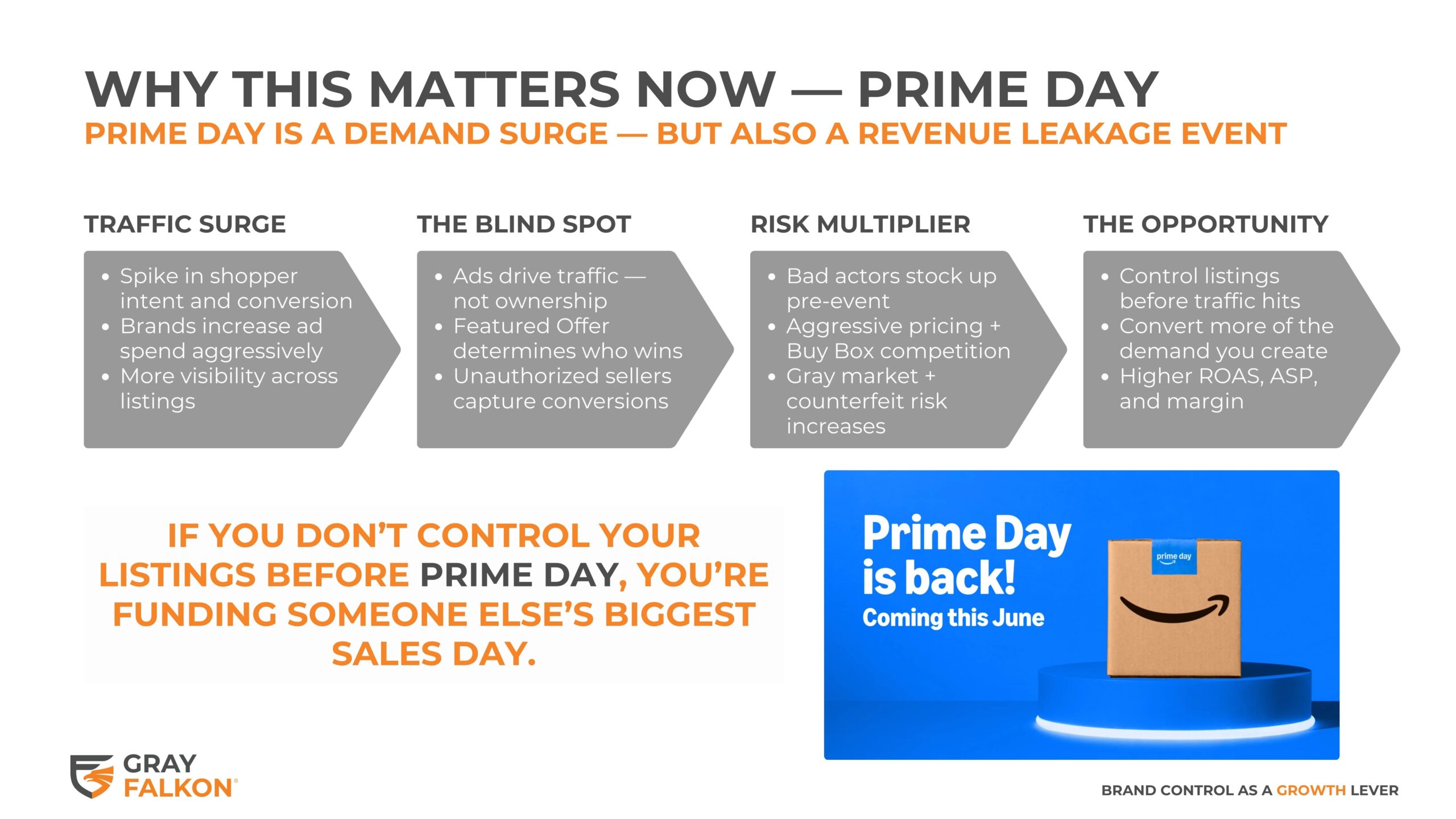
The webinar concluded with a warning for brands entering major traffic events like Prime Day. Prime Day compresses months of demand into just a few days. That creates:
- Massive traffic spikes
- Increased marketplace competition
- Higher CPC pressure
- More visibility for unauthorized sellers
If brands do not control their listings before these demand surges, they risk funding someone else’s biggest sales event of the year.
Final Takeaway: Marketplace Control Is Becoming Part of Media Strategy
The biggest takeaway from the webinar was not simply that unauthorized sellers exist. It was that marketplace control now directly impacts:
- Retail media efficiency
- Incrementality
- Conversion measurement
- Pricing stability
- Customer trust
- Growth predictability
For years, brands optimized media while treating brand protection as a separate operational issue. That separation is disappearing.
As Amazon’s marketplace becomes more competitive, automated, and AI-driven, the brands that win will not simply be the brands spending the most on advertising. They will be the brands most effectively capturing the demand they create.