

Falkon Focus: Unauthorized sellers on Amazon do more than disrupt pricing — they directly impact advertising efficiency, Buy Box ownership, conversion rates, and customer trust. Cumberland Packing’s experience with Sugar In The Raw® demonstrates how marketplace instability and rogue third-party sellers can create pricing volatility, wasted ad spend, and inconsistent sales performance on high-volume ASINs. By removing unauthorized sellers and stabilizing the channel, Cumberland improved pricing consistency, increased Buy Box ownership to 99%, reduced advertising inefficiencies, and achieved stronger sales growth. As Amazon retail media spending continues to rise, brands are increasingly recognizing that Amazon brand protection, marketplace control, and unauthorized seller enforcement are essential to improving ROAS, incrementality, and long-term eCommerce growth.
For years, many eCommerce teams treated unauthorized sellers as a channel conflict problem. Today, leading brands are realizing something much bigger:
Unauthorized sellers directly impact advertising efficiency, conversion rates, pricing stability, and incremental growth on Amazon.
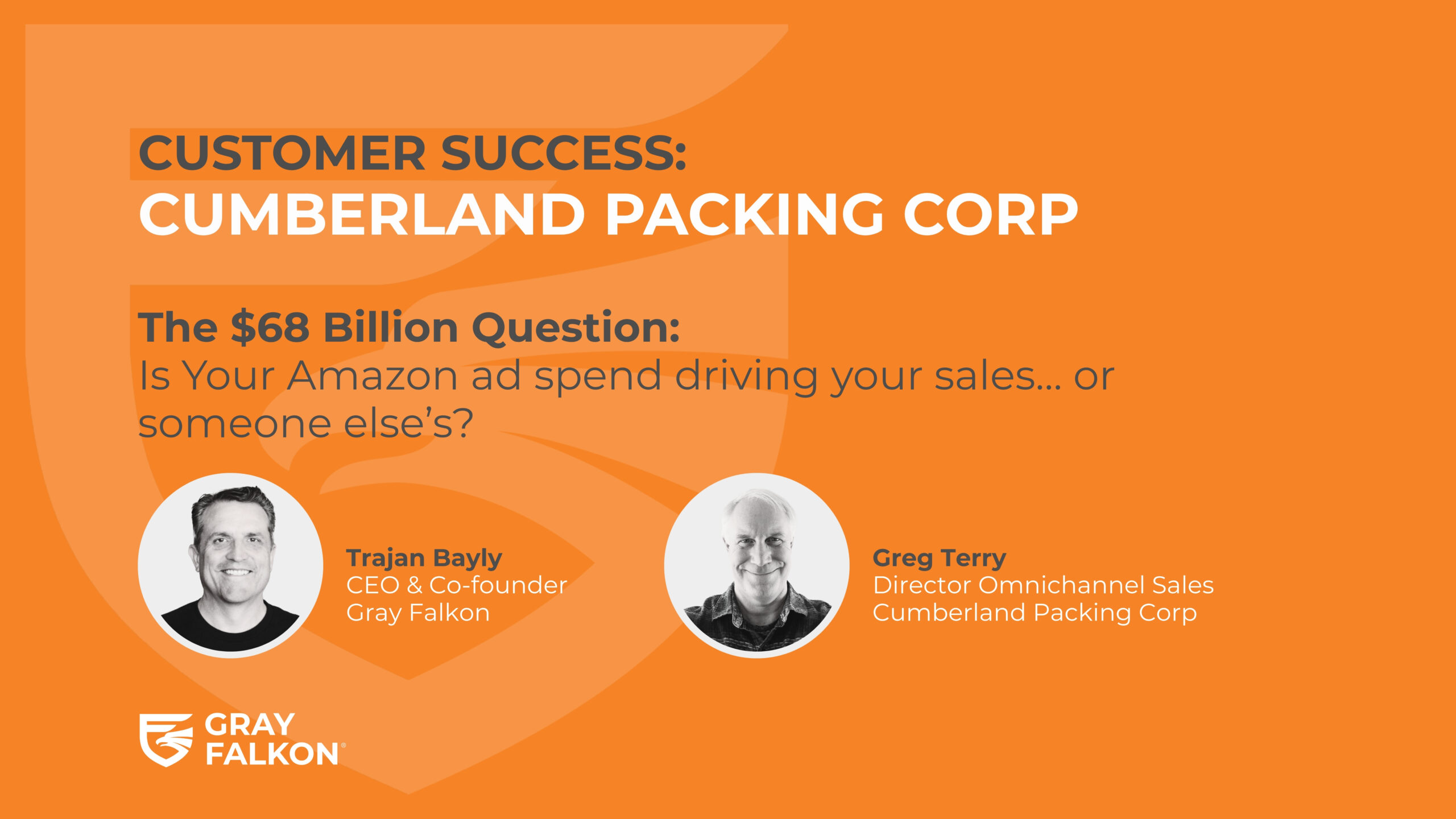
That shift was the focus of Gray Falkon’s recent webinar featuring a real-world case study from Cumberland Packing Corp., the maker of Sugar In The Raw®. The discussion highlighted how marketplace instability was quietly undermining one of the brand’s top-performing Amazon SKUs — and how restoring brand control unlocked measurable operational and advertising gains.
The Hidden Cost of Unauthorized Sellers
Many brands assume Amazon advertising performance problems are primarily media optimization issues.
But in reality, marketplace instability often creates inefficiencies.
In Cumberland’s case, third-party sellers created severe weekly price volatility on Sugar In The Raw 200ct, including swings from approximately $23 during parts of the week to under $10 on weekends.
The impact extended far beyond pricing:
- Roughly 30 competing third-party listings created marketplace noise
- Cumberland frequently lost the Buy Box on a major SKU
- The product became unavailable to customers multiple days per week
- Advertising efficiency suffered due to inconsistent pricing and conversion dynamics
At one point, the SKU represented 18% of total revenue while simultaneously experiencing major Buy Box instability.
This is increasingly common across Amazon:
Brands generate demand through advertising, retail media, influencer campaigns, and off-platform marketing — only to have unauthorized marketplace sellers capture portions of the conversion.
Why Marketplace Control Is Breaking
Modern eCommerce environments are fundamentally different from the marketplaces brands operated in five years ago.
Today’s marketplace realities include:
- Professionalized unauthorized sellers who are systematically capturing demand
- Automated repricing and arbitrage tools are accelerating pricing volatility
- Regional Buy Box fragmentation
- Cross-border inventory movement
- Marketplace algorithms prioritizing availability and price competitiveness
- Media spend is scaling faster than channel governance processes
As a result, many brands are unknowingly funding marketplace inefficiency with their advertising budgets.
The webinar emphasized that brand control is no longer simply a legal or compliance initiative. It is now directly tied to:
- Advertising incrementality
- Conversion rate optimization
- Customer trust
- Pricing consistency
- Revenue predictability
- Marketplace profitability
The Turning Point: Brand Control as a Growth Lever
Cumberland partnered with Gray Falkon to reduce unauthorized seller activity and stabilize marketplace conditions. The strategy focused on removing rogue sellers and listings while restoring pricing consistency and Buy Box ownership.
The Challenge: Weekly Pricing Chaos
Before the engagement, Sugar In The Raw 200ct faced relentless price manipulation on Amazon. Roughly 30 competing third-party listings were driving extreme weekly price whiplash — swinging from under $10 on weekends to as high as $23 by Monday. The brand lost the Buy Box five days a week on a top SKU representing 18% of total revenue, leaving significant sales on the table every week.
The Solution: Removing Rogue Sellers and Listings
Gray Falkon cleared unauthorized 3P traffic to stabilize pricing and make the SKU consistently accessible seven days a week. The work dropped average selling price from $14.95 to $10.94 (against a $10.99 target), increased the share of days at or below $11.99 from 13% to 69%, and extended the longest stable price run from 49 days to 175 days — a 3.5x improvement. With pricing no longer “pinging” the algorithm with noise, the listing stabilized and ROI paid back quickly through ad spend savings alone.
The Results
| Metric | Result | Detail |
| Buy Box ownership | 99% | Eliminated 3P competitors |
| Sales growth | >20% | Outpaced the ~20% traffic boost, driven by higher conversion rate |
| Average daily units sold | +31% lift | Following pricing stabilization |
| ROAS | 6.0x | Improved from 5.7x |
| ACOS | 16.6% | Improved from 17.5% |
| Conversion rate | 65% | vs. 43.9% at the $16 zone — a 47% relative lift |
| CPC & ad spend | Lower | Fewer competitors bidding reduced costs drastically |
| Ad budget | Reinvested | Freed-up budget redirected to grow struggling categories |
(Impact metrics provided by Cumberland Packing Corp)
Cleaner channel = predictable, efficient operations. Brand control isn’t just a defensive play — it’s a growth lever.
Operational Improvements
After clearing unauthorized third-party traffic:
- The SKU became consistently available seven days a week
- Average selling price dropped from $14.95 to $10.94, aligning with the target price of $10.99
- Days priced at or below $11.99 increased from 13% to 69%
- The longest stable price run improved from 49 days to 175 days — a 3.5x increase
- Marketplace “pinging” caused by pricing volatility was dramatically reduced
The webinar described this outcome simply: Cleaner channel = predictable, efficient operations.
The Advertising Impact Was Immediate
Once marketplace conditions stabilized, advertising performance improved rapidly.
According to the case study:
- Buy Box ownership reached 99%
- Third-party competitors were effectively eliminated
- Sales increased more than 20%
- Average daily units sold increased 31%
- ROAS improved from 5.7x to 6.0x
- ACOS improved from 17.5% to 16.6%
- Conversion rate increased to 65%, compared to 43.9% in the unstable pricing environment
Equally important:
Lower CPCs and reduced competitive bidding pressure freed advertising budget to reinvest in growth categories.
This is one of the most overlooked dynamics in modern retail media:
When brands improve marketplace control, advertising often becomes more efficient without changing the media strategy itself.
Modern Brand Protection Requires More Than Monitoring
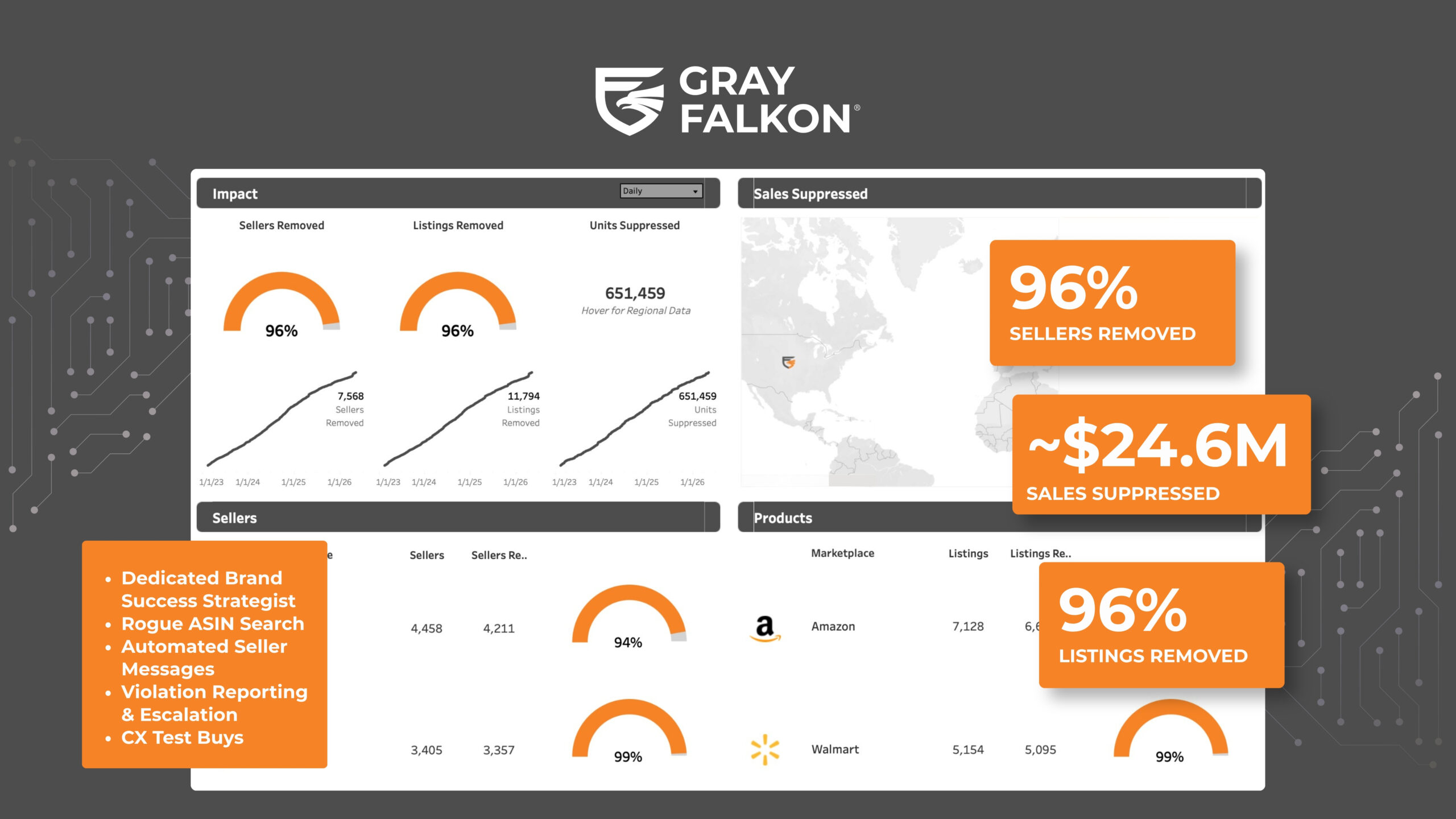
The webinar also highlighted how marketplace enforcement has evolved beyond manual seller monitoring. Gray Falkon’s approach combines:
- Dedicated Brand Success Strategists
- Rogue ASIN discovery
- Automated seller messaging
- Violation reporting and escalation
- Customer Experience test buys
The broader impact across programs shown during the webinar included:
- 96% seller removal rates
- 96% listing removal rates
- Approximately $24.6M in suppressed unauthorized sales activity
The Bigger Shift Happening on Amazon
The most important takeaway from the webinar may be this:
Marketplace control is increasingly becoming part of an eCommerce growth strategy — not just an enforcement strategy.
As Amazon advertising costs rise and incrementality becomes harder to measure, brands are looking beyond media optimization alone.
They are asking:
- Are we actually capturing the demand we generate?
- Are unauthorized sellers disrupting conversion efficiency?
- Is pricing instability hurting advertising performance?
- Are we funding competitor growth with our own ad spend?
For many brands, the answer is yes.
Brand Control Is No Longer Separate From Growth Strategy
Prime Day, holiday periods, and major traffic events amplify marketplace instability.
Brands that treat unauthorized seller activity as “background noise” often experience:
- Higher advertising costs
- Lower conversion efficiency
- Increased Buy Box volatility
- Reduced pricing control
- Poor customer experience consistency
The Cumberland case study demonstrates that improving marketplace control can create measurable gains across both operations and advertising performance.
Brand control is no longer separate from growth strategy. On Amazon, it is increasingly the growth strategy.
See How Cumberland Turned Brand Control Into Measurable Growth