

Falkon Focus: As Amazon’s AI-driven shopping experiences evolve, buying decisions are increasingly made by algorithms, not shoppers. Tools like Rufus can monitor prices, compare sellers, and trigger purchases automatically, making unauthorized sellers a far greater risk. In an agentic commerce environment, brand protection must operate in real time to preserve pricing integrity, Buy Box control, and long-term marketplace visibility.
Amazon’s AI isn’t just helping shoppers browse faster – it’s beginning to decide when and where purchases happen. As shopping on Amazon becomes increasingly automated, the line between discovery, comparison, and checkout is starting to blur.
In a recent Amazon feature on AI productivity, Doug Herrington, CEO of Worldwide Amazon Stores, shared his personal AI life hack: using Amazon’s AI to track price drops and act the moment the best deal appears. No manual searching. No repeated price checks. Just an automated system watching the market and buying at the optimal moment.
That example signals a much bigger shift underway.
With Amazon rolling out increasingly agentic shopping experiences, powered by Rufus, brands are entering a world where AI doesn’t just influence discovery or recommend products, it can actively decide when a purchase happens and which seller wins it. In these moments, AI is no longer just assisting the shopper; it’s acting on their behalf.
This changes everything about brand protection. When AI is making buying decisions automatically, brand protection is no longer optional – it becomes a prerequisite for remaining visible, competitive, and trusted on the marketplace.
From Discovery Engine to Buying Agent
Amazon’s Rufus didn’t appear overnight as a fully formed shopping agent. It started as a discovery tool, designed to help shoppers navigate Amazon’s massive catalog more efficiently by answering product questions, summarizing reviews, and guiding comparisons. Early versions of Rufus functioned much like an in-line assistant, responding to prompts such as “Is this product good for travel?” or “What’s the difference between these two options?”
But that role has been steadily expanding.
As Amazon continues to invest in AI-driven shopping experiences, Rufus is evolving from a passive assistant into something far more consequential – a system that doesn’t just surface information, but actively interprets market conditions and shopper intent in real time.
Today, Rufus is increasingly capable of:
- Alerting shoppers to price drops
- Comparing sellers in real time
- Recommending when to buy, not just what to buy
- And, in certain instances, executing purchases automatically or with minimal user intervention
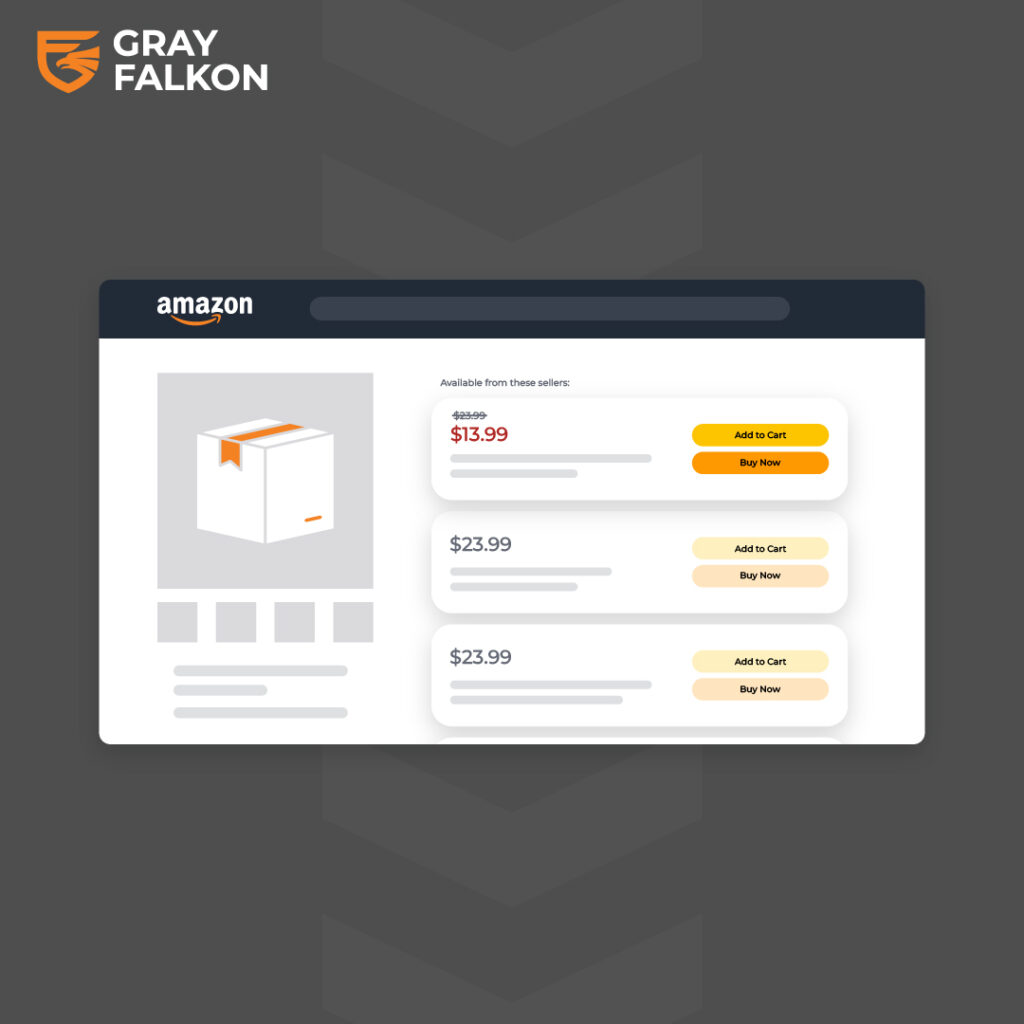
This marks a fundamental shift in how buying decisions are made on Amazon. AI is becoming the shopper, and the implication for brands is stark: If an unauthorized seller is cheaper – even briefly – AI will find them, favor them, and route demand to them. Not tomorrow. Instantly.
Why Unauthorized Sellers Are a Bigger Risk in an AI-Driven Agentic Marketplace
Historically, unauthorized sellers caused damage over time. Their impact was real, but it often unfolded gradually, giving brands at least some opportunity to react. The effects of unauthorized sellers include:
- Gradual price erosion
- Inconsistent customer experience
- Slow Featured Offer or Buy Box churn
In a human-driven shopping journey, these issues accumulate across days or weeks. A shopper might notice a cheaper seller, hesitate, compare options, or abandon the purchase altogether. Brands had time to identify the issue and intervene.
But agentic commerce collapses that timeline. When AI systems are trained to optimize for price, availability, and speed, they unintentionally reward bad actors who:
- Ignore Minimum Advertised Price (MAP) policies
- Cut corners on fulfillment and customer experience
- Sell diverted, expired, or non-compliant inventory
AI doesn’t understand brand intent. It understands signals. And unauthorized sellers are very good at sending the “right” signals – especially on price.
The New Buy Box Is Decided by Algorithms, Not Shoppers
As Amazon’s systems grow more autonomous, brands face a new reality on Amazon: the Buy Box is no longer influenced primarily by human comparison and decision-making. It’s increasingly governed by automated systems designed to optimize outcomes at scale.
You’re no longer competing only for human attention. You’re competing for algorithmic preference.
That means:
- Milliseconds matter
- Always-on enforcement matters
- Lagging brand protection equals lost revenue – fast
When a shopper manually compares offers, there’s friction. They may hesitate, read reviews, or decide to wait. But when an AI system is evaluating offers continuously, those pauses disappear. The system reacts instantly to price, availability, fulfillment signals, and seller performance metrics.
A single unauthorized seller undercutting price can now trigger:
- AI-driven price alerts
- Automated purchase decisions
- Permanent algorithmic reinforcement of the wrong seller
Once an AI system “learns” that seller is the best option, it begins to favor that seller repeatedly. That preference feeds future recommendations, alerts, and buying behavior. Over time, the system doesn’t just reflect marketplace conditions; it amplifies them.
Reversing that damage becomes exponentially harder. It’s no longer about removing one seller or correcting one violation – it’s about retraining the system by restoring consistent signals across pricing, availability, and compliance. By the time brands react manually, demand may have already been redirected.
What Modern Brand Protection Must Do (That Legacy Solutions Can’t)
To compete in an agentic commerce environment, brand protection can’t rely on tools and workflows designed for a slower, human-driven marketplace. Legacy approaches were built around:
- Weekly reports that surface issues after damage has already occurred
- Manual reviews that struggle to scale across thousands of listings and sellers
- Reactive takedowns that respond after demand has been diverted
Those models assume time is on the brand’s side. In an AI-driven marketplace, it isn’t.
When algorithms are continuously evaluating price, availability, and seller performance, brand protection must operate at the same speed and scale as the systems making buying decisions. That means:
- Continuous marketplace monitoring, not periodic checks
- Real-time detection of unauthorized listings and sellers
- AI-driven enforcement that can act quickly and communicate effectively with Amazon’s systems
This is where Gray Falkon operates differently. Instead of reacting to violations after they surface in reports, Gray Falkon is built to detect and address unauthorized seller activity as it happens, helping brands maintain clean, consistent signals in an environment where AI systems are making decisions continuously.
Why Gray Falkon Is Built for the AI Agentic Commerce Era
Gray Falkon was designed for a world where:
- Marketplaces move faster than humans
- AI systems reward consistency, compliance, and precision
- Enforcement must be proactive, not reactive
In an agentic commerce environment, brand protection isn’t about fixing isolated issues after they surface. It’s about maintaining clean, reliable marketplace signals at all times so automated systems consistently favor the right offers.
Our platform continuously monitors unauthorized sellers and policy violations across Amazon and other marketplaces – so when AI shopping agents evaluate options, your listings win. Not because they’re cheaper. But because they’re clean, compliant, and algorithmically trusted.
In a marketplace where machines are making decisions at machine speed, Gray Falkon gives brands the enforcement infrastructure required to keep pace.
The Bottom Line
When Amazon’s AI can:
- Detect a price drop
- Alert a shopper
- And complete a purchase on their behalf
Brand protection stops being a legal safeguard or operational afterthought. It becomes a prerequisite for growth.
In an agentic commerce environment, where buying decisions happen automatically and at machine speed, the cost of inaction is immediate. Unauthorized sellers don’t need time to erode a brand – they just need a momentary advantage for algorithms to reroute demand.
The brands that win in this new era won’t simply market better or optimize listings more aggressively. They’ll protect better. They’ll maintain clean marketplace signals, enforce compliance continuously, and operate at the same speed as the systems making purchasing decisions.
Because when AI is buying for the shopper, brand protection isn’t optional – it’s foundational. Schedule a demo today and learn how Gray Falkon can help protect your brand on Amazon, Walmart, and other major marketplaces.