
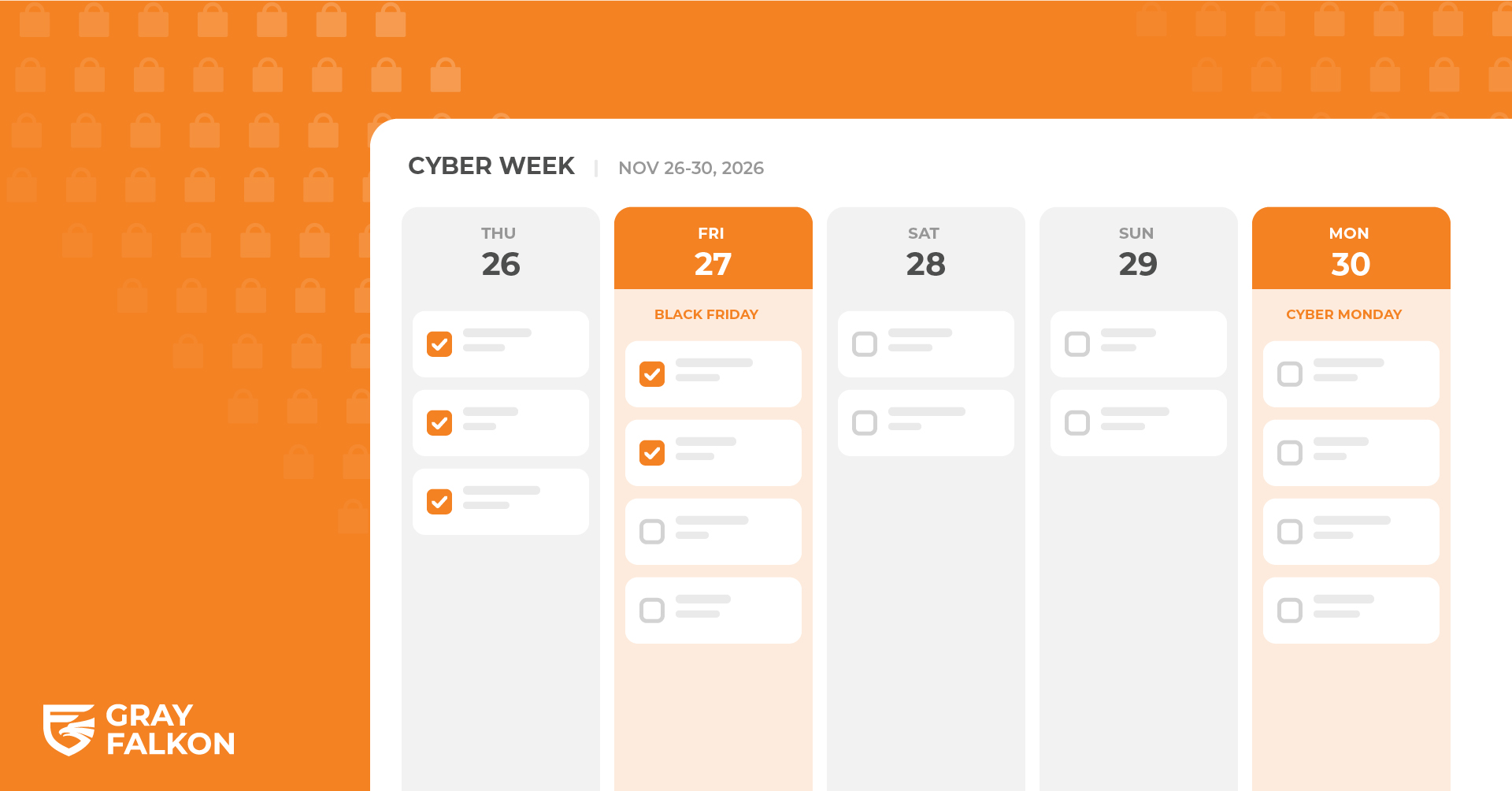
Falkon Focus: Cyber Week can amplify unresolved seller, pricing, and listing issues just as brands increase promotional spending. Before traffic peaks, confirm authorized sellers on priority products, document planned promotions, and establish a response plan. During the event, monitor seller activity, Featured Offer ownership, pricing, and customer experience. Afterward, use the findings to strengthen marketplace control through December and into 2027.
Cyber Week runs November 26–30, 2026, with Black Friday on November 27 and Cyber Monday on November 30. Adobe forecasts $47.5 billion in U.S. online spending across those five days.
For brands selling on marketplaces, increased demand creates an important question: Who is positioned to capture the sale?
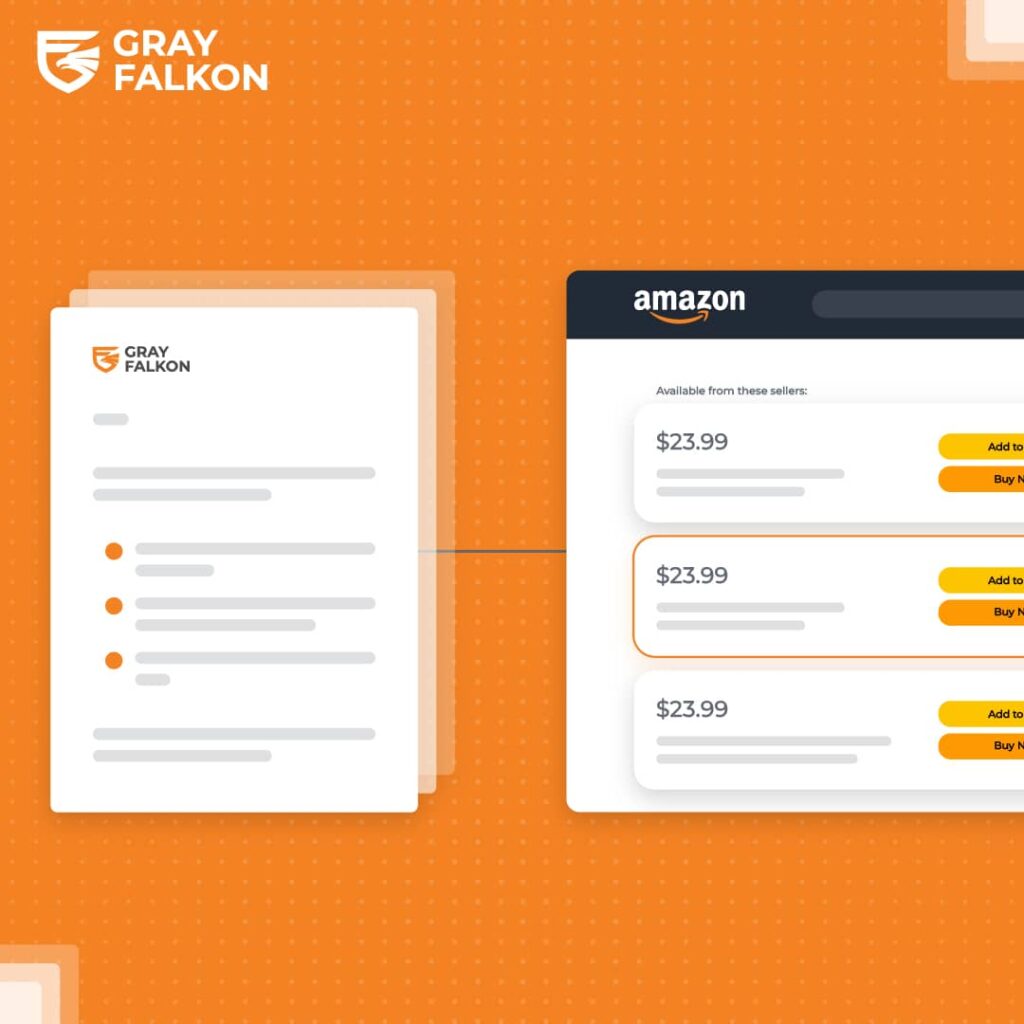
Unauthorized seller activity can disrupt pricing, shift Featured Offer ownership, and complicate advertising performance. Preparation starts with knowing who is selling your products, what shoppers encounter, and how your team will respond when something changes.
Why Does Cyber Week Raise the Stakes for Marketplace Control?
More Demand Reaches the Same Product Pages
Promotions and advertising bring more shoppers to priority listings. On Amazon, the Featured Offer (often called the Buy Box) strongly influences which seller captures a purchase, although shoppers can select other available offers.
When an unauthorized seller hold the Featured Offer position, demand generated by the brand can benefit a seller outside its authorized network. Featured Offer changes can also affect advertising delivery, depending on the campaign type.
Promotional Pricing Makes Unexpected Changes Harder to Spot
Planned discounts, coupons, bundles, and competing offers create more price movement during Cyber Week. Without a clear promotional baseline, teams can struggle to distinguish an expected discount from a change that needs investigation.
A low price alone does not establish that a seller is unauthorized. Teams need to review seller identity, authorization status, promotion dates, and offer details together.
AI-Assisted Discovery Adds Another Path to Purchase
Shoppers are increasingly using AI tools to research products and find deals. Adobe expects referral traffic from AI services to U.S. retail sites to grow during the holiday season.
For brands, the practical task is to verify what shoppers encounter when they arrive: accurate product information, clear quantities and variants, available inventory, and the seller behind the offer.
Before Cyber Week: Establish Your Baseline
The strongest Cyber Week results usually come from work finished before the event. Prime Big Deal Days, a 48-hour event held October 6 and 7, gave brands a recent look at how their listings behave under promotional pressure, and anything that surfaced then is worth fixing before Cyber Week. Brands that have already mapped out their holiday calendar can treat this as the Cyber Week companion to a broader Q4 plan.
A seller’s unauthorized status does not, by itself, establish a marketplace policy violation. Confirm seller authorization against your records, then document any applicable policy or intellectual property violations separately. Seller engagement and marketplace reporting serve different purposes.
Use this checklist to prepare. The earlier each step happens, the more time enforcement has to work.
- Rank ASINs by exposure: List the products with the highest sales, the heaviest advertising, and the most Cyber Week demand, including essentials and beauty items. Start protection work on those listings first.
- Review the Featured Offer on every priority ASIN: Note who holds it today, how often it changes hands, and which sellers are attached to the listing.
- Document authorized sellers and price baselines: Record who is approved to sell each product and the price each seller should hold, so unauthorized offers stand out against a clear standard.
- Start seller engagement and marketplace reporting early: Review and removal take time, and reports filed in October have a better chance of resolving before Thanksgiving than reports filed during the event.
- Coordinate with the advertising team: If an unauthorized seller holds the Featured Offer on an advertised ASIN, the brand pays for clicks that someone else converts. Agree in advance on how spend will shift if that happens.
- Gather consumer experience evidence where appropriate: Understanding what shoppers actually receive from unauthorized offers strengthens reports and shows which listings carry the most reputational risk.
- Assign owners for the long weekend: Decide who watches the priority listings each day, who approves escalations, and how quickly decisions need to be made.
What Should Brands Monitor While Cyber Week Runs?
During the event, speed matters more than perfection. Four signals show brands where to act first.
Featured Offer Ownership
A change in who holds the Featured Offer / Buy Box on a priority ASIN is the earliest sign of trouble. Monitor listings regularly and note when ownership changes hands.
Price Movement
Sudden drops below the established baseline often point to an unauthorized offer. Capture the seller details and the evidence while it is fresh, because offers can disappear and return within hours.
New Seller Activity
New sellers attaching to advertised ASINs are common during major events. Sellers who stockpile discounted inventory often return, which is why Prime Day arbitrage tends to raise unauthorized seller activity after the event as well. Record each appearance, because repeat appearances are what turn a single seller into a pattern.
Customer Experience Signals
Reviews and questions that mention damaged packaging, missing items, or unexpected product versions can point to gray market inventory. Reviews appear on the shared product page, so the brand carries the consequences even when another seller made the sale.
After Cyber Week: Turn Findings Into the Next Action Plan
Marketplace control work continues after Cyber Monday.
☐ Compare Results With Your Baseline
Review unauthorized seller counts, authorized-seller Featured Offer share, pricing deviations, availability, and listing changes on priority products.
☐ Review Advertising Alongside Marketplace Conditions
Assess campaign performance alongside seller activity, Featured Offer changes, inventory, and promotions. This helps teams investigate performance shifts without attributing every change to unauthorized sellers.
☐ Prioritize Repeat Sellers and Unresolved Cases
Identify sellers that appeared during both Prime Big Deal Days and Cyber Week. Continue appropriate outreach, reporting, and follow-up on open issues.
☐ Share Sourcing Insights
Review seller-provided sourcing information with distribution and account teams. Use documented findings to determine where additional investigation or channel follow-up is needed.
☐ Update December and 2027 Priorities
Carry the findings into year-end promotions and future event planning. Refine product priorities, monitoring thresholds, authorized seller records, and escalation responsibilities.
How Gray Falkon Helps Brands Prepare for Cyber Week
Gray Falkon combines AI and automation with dedicated strategic oversight to help brands reduce unauthorized seller activity and manage marketplace issues with less internal work.
AI-Powered Monitoring
Gray Falkon monitors Amazon, Walmart, eBay, TikTok Shop, and other major marketplaces to identify unauthorized sellers and relevant listing activity. This visibility helps teams prioritize products, investigate changes, and track progress.
Targeted Seller Engagement
Gray Falkon conducts seller outreach at scale on your brand’s behalf, communicating authorization requirements and requesting inventory sourcing information.
Falkon Connect supports consistent, ongoing seller communication and encourages voluntary removal of unauthorized offers. Seller responses can help reveal distribution gaps and inform next steps.
AI-Driven Marketplace Engagement
Gray Falkon identifies and documents applicable marketplace policy violations, submits reports on your brand’s behalf, and follows up through available escalation channels.
Marketplaces review the submissions and determine what action to take. Seller engagement and marketplace reporting can operate alongside one another as part of the broader strategy.
Strategic Oversight and Reporting
A dedicated Brand Success Strategist helps align activity with your priority products, promotional calendar, and marketplace concerns.
Through Gray Falkon’s portal, your team can review seller- and product-level insights, track results, and access data for internal reporting.
Prepare Before Traffic Peaks
Cyber Week preparation starts with a clear view of your marketplace conditions: who is selling, who holds the Featured Offer, what prices shoppers see, and which issues need action.
Establish that baseline early, assign clear responsibilities, and keep monitoring through the event. The result is a more focused response when conditions change.
Know who is positioned to capture your Cyber Week demand. Schedule a demo today to see how Gray Falkon helps brands identify unauthorized sellers activity, coordinate seller engagement, and submit documented marketplace policy violations.