


Falkon Focus: Amazon’s text-to-shop experience brings AI-assisted purchasing into a message thread. For brands, the question extends beyond product discovery to which seller receives the order. Amazon’s public text-to-shop materials do not explain seller selection for these reorders. Related Alexa developer guidance distinguishes the requested product from the seller Amazon selects. Start with visibility into sellers on priority ASINs, then connect that activity to Buy Box stability, pricing, forecasting, advertising efficiency, and customer trust. Follow through with seller engagement and documented marketplace reporting where applicable.
A customer wants more of your product. They remember the brand, know what they need, and ask an AI assistant to buy it again.
That sounds like a retention win. But for a brand selling on Amazon, one question remains: Which seller receives the order?
Amazon’s new text messaging option for Alexa for Shopping brings that question into focus. As AI assistants handle more of the purchase journey, brands need to understand how product demand translates into sales for their authorized channel.
What Is Amazon’s New Text-to-Shop Experience?
Amazon is introducing shopping by text through Alexa for Shopping, beginning with a small group of invited U.S. customers and expanding in the coming weeks.
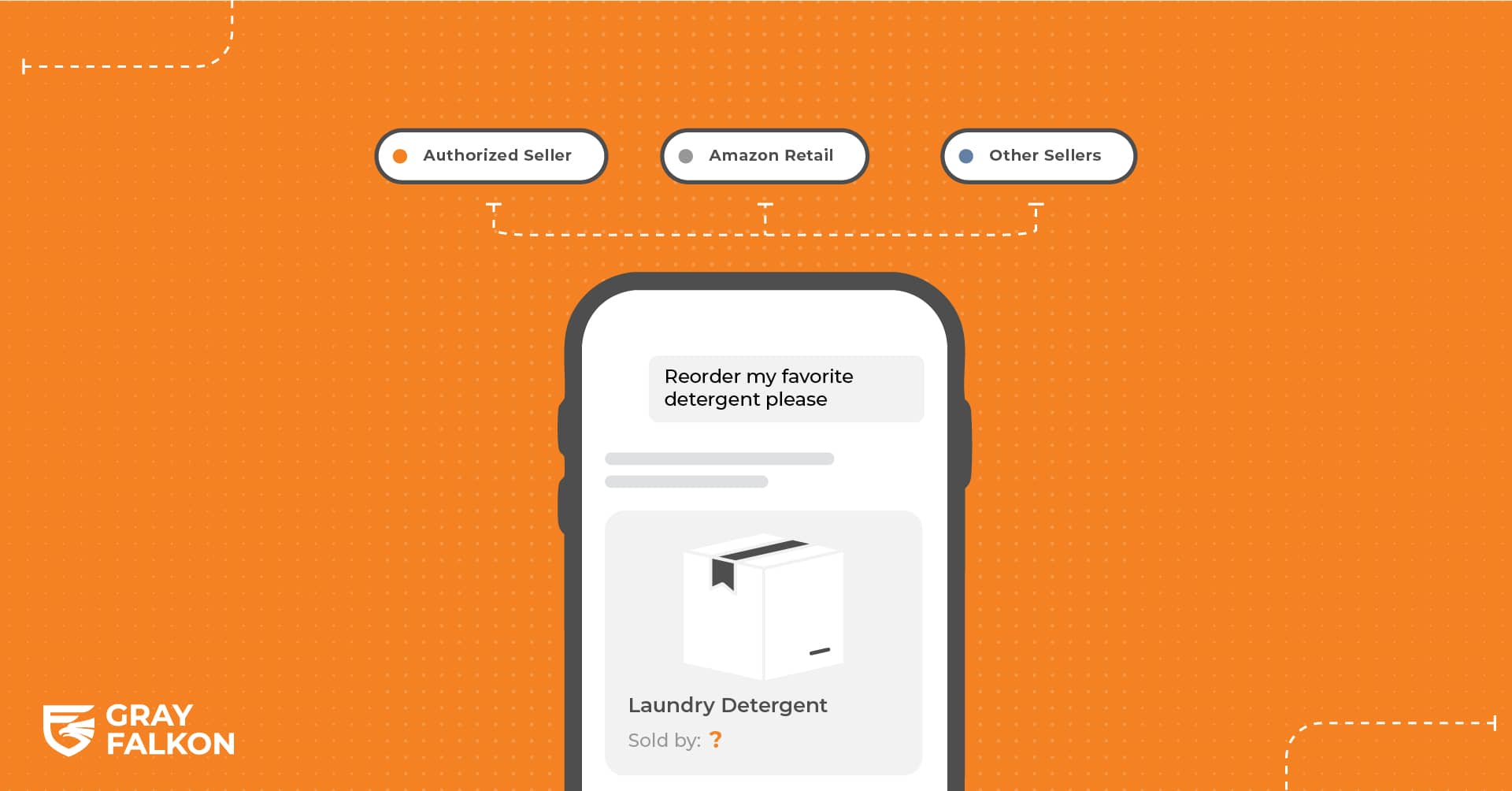
Customers can use messages to research products, build carts, and complete purchases with the assistant’s help. In Amazon’s reorder example, a shopper asks for the laundry detergent purchased the previous month. Alexa finds it and buys it with the customer’s approval.
The announcement does not explain whether that reorder favors the previous seller, the current Featured Offer, Amazon Retail, or another eligible offer.
That is an open question — not evidence that Alexa is directing orders to unauthorized sellers. It also means brands should not assume that a repeat purchase returns to the seller that handled the original transaction.
What Does Amazon Disclose About Alexa Seller Selection?
Amazon provides some relevant guidance, but the scope of each source matters. Its text-to-shop announcement describes the buying experience; its developer documentation explains a different Alexa shopping workflow; and Seller Central explains Featured Offer selection.
Alexa Shopping Actions Separate the Product From the Seller
Amazon’s Alexa Shopping Kit FAQ explains that third-party skills submit an ASIN rather than choose a specific seller’s offer. Amazon then selects a seller using provider, cost, and shipping considerations. Customers can change the seller through Amazon’s website after adding the item to their cart.
This guidance was last updated March 26, 2024, and applies to Alexa Shopping Actions for third-party skills. It does not establish the seller-selection rules for the new text-to-shop experience. Its relevance is the distinction it documents: identifying a product and selecting its seller are separate steps in that Alexa workflow.
Featured Offer Guidance Provides Context, Not a Text-to-Shop Rule
Seller Central’s offer placement guidance identifies price, availability, and the customer’s shipping address among the factors used to select the Featured Offer. Its Featured Offer guidance also explains that offers can rotate and may differ by customer location or Prime membership.
Seller Central’s Alexa for Shopping page connects the assistant’s price-history feature to Featured Offer prices. That describes the pricing data shown to customers; it does not confirm which seller receives a text-based reorder.
Taken together, these resources explain why offer conditions deserve attention. They do not confirm that Alexa always uses the current Featured Offer, retains the original seller, or prioritizes Amazon Retail when processing a text-based purchase.
Sold by and Ships From Answer Different Questions
Amazon’s third-party ordering guidance distinguishes the seller from the fulfillment provider. An item can be sold by a third-party and shipped by Amazon.
For brands assessing AI-assisted purchases, the relevant question is which seller received the sale, alongside who shipped the product. Amazon fulfillment alone does not establish seller identity or brand authorization.
Why Does Amazon Text-to-Shop Matter for Marketplace Control?
Marketplace control is the ongoing work of identifying who sells your products, addressing unauthorized seller activity, and identifying and escalating applicable marketplace violations.
Agentic commerce makes that work relevant across buying journeys that may take place outside a traditional product page.
Product Loyalty Does Not Establish Seller Loyalty
A shopper’s request to buy the same detergent expresses a preference for a product. It does not necessarily express a preference for a seller.
For brands, that distinction matters. A customer may consider the purchase a direct continuation of their relationship with the brand, even when another business supplies the product.
The potential concern is straightforward: if an unauthorized seller captures a reorder, product loyalty could generate revenue outside the brand’s intended channel. Any resulting product condition, delivery, or service problems could still shape how that customer feels about the brand.
Amazon’s announcement does not establish that this is happening. It makes the seller-selection question more relevant to investigate.
The customer may approve the purchase within a conversation without independently revisiting the product detail page to compare offers. Approval of a purchase should not be treated as proof that the shopper reviewed the seller’s identity and authorization status.
How Does Agentic Commerce Affect the Marketplace Control Flywheel?
Agentic commerce uses AI assistants to perform shopping tasks on a customer’s behalf, within the permissions and approval steps of the service. Text-to-shop is one interface for that activity; it does not mean every purchase happens without approval.
Gray Falkon’s Marketplace Control Flywheel connects marketplace control with Buy Box stability, pricing stability, forecast accuracy, advertising efficiency, customer trust, and profitable growth.
Text-based shopping adds another reason to examine those relationships. The following are business implications of the new experience, rather than claims about Alexa’s seller-selection rules.
Marketplace Control: Know Who Can Capture Demand
Seller visibility is the starting point. Brands need to understand who offers their products, which sellers are authorized, and where unresolved seller activity creates exposure.
Buy Box Stability: Monitor Who Is Positioned to Capture Demand
Track your authorized seller’s Featured Offer performance alongside competing offers on priority ASINs. These signals help identify exposure as AI-assisted shopping grows.
Pricing Stability: Examine the Seller Behind the Price
When a competing offer changes price, look beyond the discount: who is offering it, what inventory supports it, and how could it affect your product’s Featured Offer competitiveness, margins, and sales performance on Amazon?
Review pricing alongside seller activity and availability to understand the potential business impact as customers delegate more shopping decisions.
Forecast Accuracy: Distinguish Demand From Channel Capture
Customer interest in a product and sales are different measures. If a brand evaluates only its own sales, it may struggle to distinguish weaker demand from demand captured by competing sellers. That distinction matters when planning replenishment and promotions.
Advertising Efficiency: Connect Ad Spend to Sales Performance
Review advertising results alongside seller activity, Featured Offer ownership, pricing, and availability to understand who is positioned to capture the demand your campaigns create. This helps teams investigate whether marketplace conditions are diverting sales to competing sellers and reducing the return on ad spend.
Customer Retention: Protect the Repeat Purchase Experience
Marketing and product satisfaction can bring a customer back to your brand, but the seller handling the next order may differ. With Text-to-Shop, a customer can ask Alexa to reorder a familiar product without independently revisiting the product page to compare sellers. Reducing seller-related product-condition, fulfillment, and service issues helps protect the experience that supports repeat purchases and long-term customer value.
Customer Trust: Follow the Experience After Checkout
With Text-to-Shop, a customer may remember asking Alexa for your product more than which seller supplied it. If the order arrives damaged, late, or in an unexpected condition, that disappointment can affect trust in your brand. Marketplace control helps brands identify and address seller-related issues that can undermine that relationship.
Profitable Growth: Connect the Teams and the Evidence
Marketing, eCommerce, Sales, and Operations need a shared view of seller activity, Featured Offer ownership, pricing, availability, and sales performance. Reviewing these signals together helps teams prioritize marketplace issues that may affect growth and profitability.
As Text-to-Shop expands, strengthen AI-agent readiness by keeping product information accurate, monitoring seller activity and offer competitiveness, and resolving marketplace issues. These actions help prepare your brand for AI-assisted purchases while supporting a more consistent customer experience.
How Can Brands Prepare for AI-Assisted Shopping?
As Amazon expands Text-to-Shop, brands can strengthen the marketplace conditions behind future AI-assisted purchases. Start with products customers frequently replenish or reorder.
- Understand your seller landscape. Identify who offers priority ASINs, verify seller authorization, and monitor new or recurring unauthorized sellers.
- Keep product information accurate. Review titles, descriptions, quantities, variants, and product images so shoppers and AI assistants encounter clear, consistent information.
- Review offer competitiveness and availability. Evaluate Featured Offer ownership, pricing, delivery promises, and inventory alongside sales and advertising performance.
- Establish a coordinated response. Assign responsibility for seller investigation, outreach, and reporting of documented marketplace policy violations. Follow through on unresolved issues.
- Adapt as Amazon provides more guidance. Review new documentation and capabilities as access expands, updating your approach as seller-selection mechanics and reporting become clearer.
AI-agent preparedness starts with accurate information, reliable offers, and a process for resolving seller-related friction. Strengthening those foundations now helps brands prepare as more shopping moves into AI-assisted conversations.
How Does Gray Falkon Help Brands Prepare for Agentic Commerce?
Gray Falkon combines AI-powered technology, automation, and marketplace expertise in a done-for-you solution that identifies seller activity, engages unauthorized sellers, and manages reporting and escalation of marketplace violations.
The process connects detection to follow-through: investigate seller activity, conduct outreach, document applicable violations, and pursue available marketplace reporting and escalation channels. Marketplaces determine what action to take on violation reports. Unauthorized status alone does not establish a marketplace policy violation.
That work strengthens the marketplace conditions behind AI-assisted shopping: visibility into sellers, fewer unresolved issues, and a more consistent customer experience.
As Text-to-Shop expands, brands can prepare by understanding who is positioned to capture demand and addressing unauthorized seller activity that may undermine sales performance or customer trust.
Request a Marketplace Control Assessment to identify where seller activity may be affecting your business.