

Falkon Focus: Sales velocity is the rate at which a product sells on Amazon over time, and it influences ranking, Featured Offer share, and inventory health. It is one of the clearest signals that a listing is gaining traction. But velocity is fragile. Unauthorized sellers, price erosion, and Featured Offer disruption can all slow it, sometimes without a brand realizing why. Protecting sales velocity means protecting the listing environment that drives it.
Sales velocity matters on Amazon, but brands often misunderstand what drives it – and what can disrupt it. Sellers know it matters, but many treat it as a simple synonym for sales volume. It is not. Velocity is about how quickly and consistently a product sells over time, not just how many units it sells. And because Featured Offer ownership, pricing, inventory availability, and advertising can all affect the pace of sales, losing control of any one of them can disrupt that momentum.
For brands, sales velocity is worth understanding for another reason: momentum can be disrupted quickly. A product that is selling consistently can lose momentum when its marketplace environment changes. Unauthorized sellers can contribute to that disruption by affecting Featured Offer ownership, pricing, inventory dynamics, and advertising performance.
So what is sales velocity, why does it matter, what factors influence it on Amazon, and how can unauthorized seller activity quietly undermine it?
What Is Sales Velocity on Amazon?
Sales velocity on Amazon is the rate at which a product sells over a given period, measured by both the number and the value of transactions. It captures the speed and consistency of sales, not just the total. A product that sells 300 units steadily across a month has a different velocity profile than one that sells 300 units in a single burst and then goes quiet, even though the raw volume is identical.
Sales velocity is not a single metric that Amazon publishes in Seller Central. It is an aggregate signal that Amazon’s systems infer from sales activity over time. That is part of why it is misunderstood: sellers can see their unit sales, but velocity is the pattern underneath those numbers, the pace and steadiness with which a listing converts attention into purchases.
The distinction from raw volume matters. Volume tells you how much you sold. Velocity tells you whether a listing is gaining, holding, or losing momentum. For that reason, velocity is one of the clearest indicators of whether a product is genuinely gaining traction or simply had a good week.
Why Does Sales Velocity Matter?
Sales velocity is closely connected to several of the outcomes that determine how a product performs on Amazon.
Organic Search Visibility
Amazon’s search experience is designed to connect shoppers with products that are relevant to their searches and likely to result in a purchase. Sales and conversion performance can contribute to that visibility over time. When a product consistently converts shoppers for relevant searches, it can strengthen its organic position – creating a reinforcing cycle in which greater visibility creates more opportunities to generate sales.
Featured Offer Share
The relationship between sales velocity and the Featured Offer is especially important, however often misunderstood. Sales velocity does not determine Featured Offer ownership on its own. Amazon considers multiple factors, including price, availability, fulfillment, delivery speed, and seller performance.
Instead, Featured Offer ownership can be an important contributor to sales momentum. Because the Featured Offer is the default purchasing option on a product detail page, losing it to another seller can redirect sales away from the brand’s preferred offer and disrupt its expected rate of sale.
Inventory and Replenishment Planning
Rate of sale is also fundamental to inventory planning. Amazon uses historical demand, inventory levels, forecasts, and other factors in its Fulfillment by Amazon (FBA) capacity and inventory-management systems, while brands and sellers use sales pace to forecast demand and determine when and how much inventory to replenish.
That makes consistency important. Unexpected changes in sales pace can complicate forecasting, while a stockout can interrupt sales momentum and create downstream effects when inventory becomes available again.
Launch Momentum
Sales momentum can be particularly important during a product launch, when a new listing has limited sales and conversion history. Brands often invest heavily in advertising, promotions, and external traffic during this period to generate awareness, conversions, and an early track record of demand.
As the product establishes sales and conversion history, it has a stronger foundation from which to compete for organic visibility. Interruptions during this period — from stockouts, pricing instability, or unexpected seller competition — can make that process more difficult.
Sales Velocity Is Only Part of the Equation
Amazon does not publish the exact weighting behind its search or Featured Offer algorithms, which makes it difficult to isolate the role sales velocity plays in either system. What is clear is that strong sales alone are not enough to sustain marketplace performance.
Amazon evaluates a much broader set of signals across its marketplace. Depending on the outcome in question, those can include relevance and conversion performance, competitive pricing, inventory availability, fulfillment and delivery performance, and seller account health.
That distinction matters for brands. Generating demand is only part of maintaining sales momentum. The marketplace environment surrounding that demand matters too.
A product may be generating strong traffic and sales, but if inventory runs out, pricing becomes uncompetitive, customer experience deteriorates, or another seller captures the Featured Offer, the conditions supporting that momentum can change quickly.
The practical takeaway: sales velocity should not be viewed in isolation. Sustaining it requires brands to pay attention not only to demand generation, but also to the marketplace conditions that determine where and how that demand converts.
What Can Disrupt Sales Velocity on Amazon?
Because sales velocity reflects the pace of sales over time, changes in the selling environment can quickly disrupt that momentum. Common factors include:
Losing the Featured Offer: The Featured Offer is the default purchase option for most shoppers. When another seller captures it, sales can shift from the brand or its authorized seller to the competing offer. Importantly, the ASIN may continue selling – the difference is who captures the sale.
Featured Offer suppression: Amazon may suppress the Featured Offer when no offer meets its requirements, including in situations involving pricing or offer eligibility. Without a default purchase option, shoppers face additional friction, which can reduce conversion and slow the product’s sales pace.
Stockouts and inventory gaps: When a product becomes unavailable, sales stop. Even shorter inventory gaps can interrupt an established pattern of demand and affect forecasting, advertising, and organic visibility.
Poor conversion: Traffic alone does not create velocity. Negative reviews, weak or inaccurate content, pricing issues, or other sources of purchase friction can reduce conversion, slowing the rate of sale even when traffic remains strong.
Pricing instability: Aggressive price competition does not necessarily reduce unit velocity. In some cases, lower prices may increase it. But persistent undercutting can erode margins, destabilize pricing, affect Featured Offer ownership, and contribute to a less predictable selling environment.
How Do Unauthorized Sellers Disrupt Sales Momentum?
Unauthorized sellers do more than compete for individual transactions. They can destabilize the marketplace conditions that allow brands to generate predictable, profitable sales.
There is an important distinction, however: an unauthorized seller does not necessarily reduce an ASIN’s overall sales velocity. The product may continue selling at the same pace — or even faster — while the brand loses control over who captures those sales, at what price, and with what customer experience.
They Capture Sales Through the Featured Offer
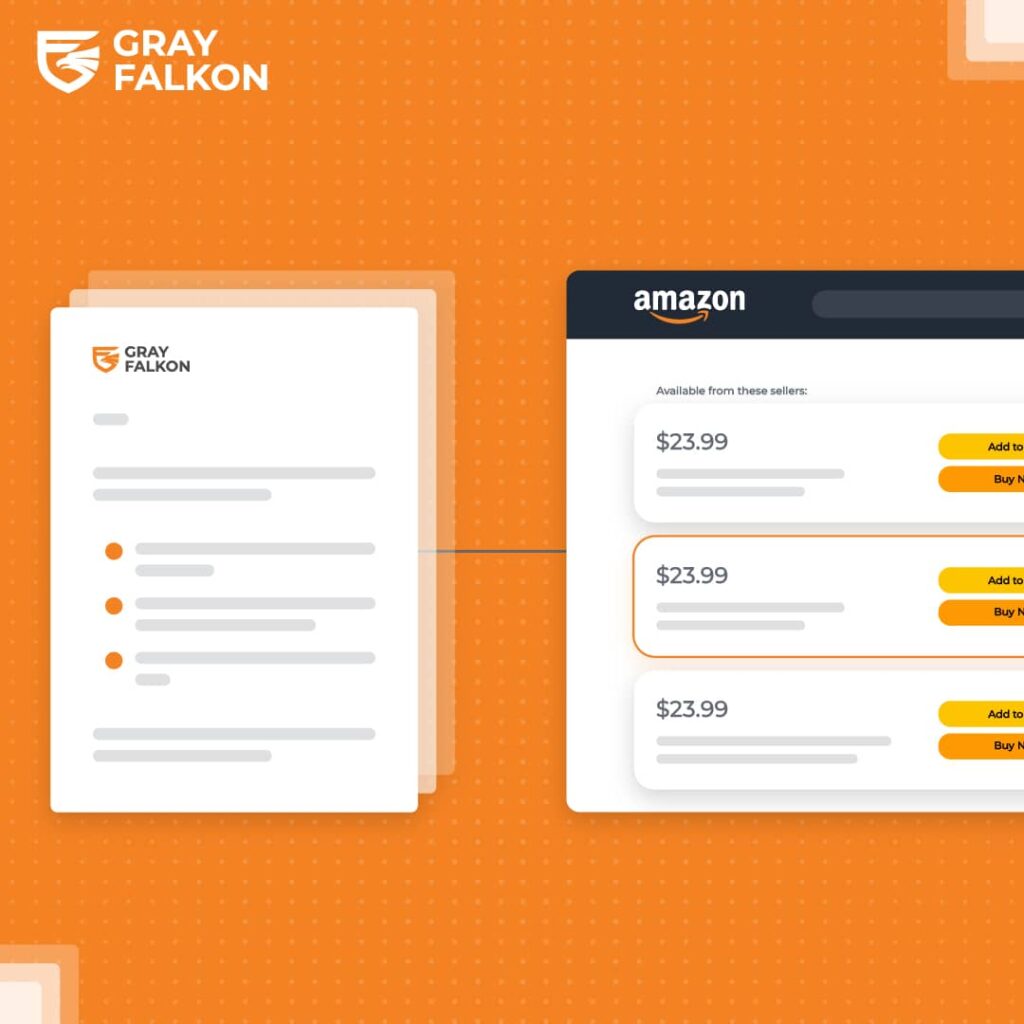
When an unauthorized seller wins the Featured Offer, shoppers who click “Add to Cart” may purchase from that seller instead of the brand or its authorized seller.
The ASIN may still be generating healthy sales velocity, but those sales are being captured outside the brand’s intended channel. The brand loses revenue, visibility into demand, and control over the transaction.
They Create Pricing Instability
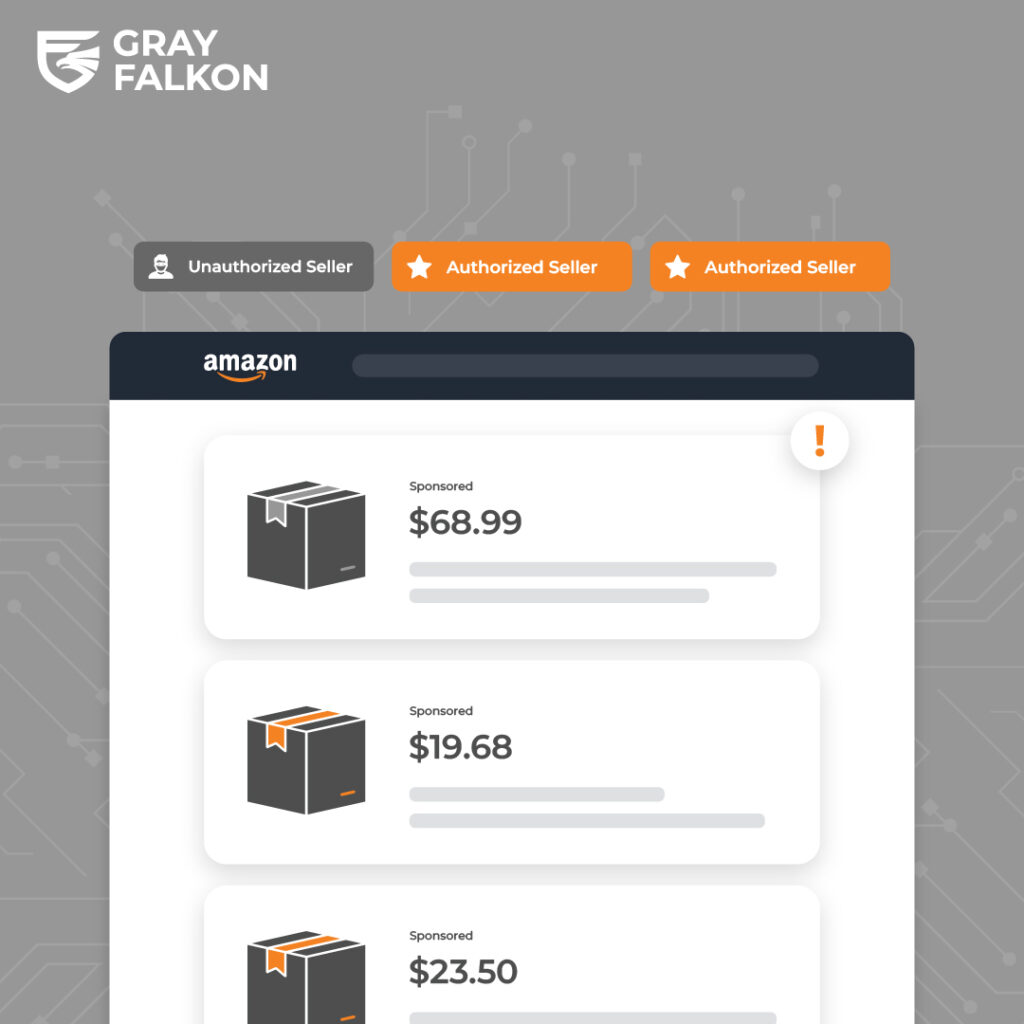
Unauthorized sellers may acquire inventory at a different cost basis and sell below the brand’s intended marketplace price. Persistent undercutting can create price volatility, affect Featured Offer ownership, compress margins, and establish new price expectations for both shoppers and Amazon’s pricing systems.
That instability can create downstream problems even after the unauthorized offer disappears. If the authorized seller returns to its intended price, that offer may be less competitive relative to recent marketplace pricing, potentially affecting Featured Offer eligibility and conversion.
They Can Damage the Customer Experience
Unauthorized inventory may be old, improperly stored, damaged, diverted from another market, or otherwise inconsistent with the experience the brand intended.
When those products create a poor customer experience, the consequences can extend beyond the seller responsible. Product reviews and ratings appear on the shared product detail page, meaning negative experiences can influence how future shoppers perceive the product regardless of which seller caused the problem.
The result can be lower conversion. And lower conversion can make it harder to sustain sales momentum.
They Make Demand Less Predictable
Perhaps the most overlooked consequence is what unauthorized sellers do to predictability.
A brand may see strong demand for an ASIN without capturing all of those sales itself. Unauthorized inventory can enter and exit the marketplace unpredictably, win the Featured Offer, change prices, and absorb demand that the brand expected to fulfill.
That makes it harder to interpret sales performance, forecast inventory needs, plan replenishment, and understand the return on advertising investments.
The takeaway is that protecting sales momentum is not simply about generating more demand. Brands also need visibility into who is capturing that demand and the marketplace conditions surrounding each sale.
A product can have strong sales velocity while the brand behind it is steadily losing control.
How Gray Falkon Helps Brands Protect Sales Velocity
Sustaining sales velocity depends on a stable listing environment: the brand or its authorized sellers holding the Featured Offer, consistent pricing, and clean listing content. Gray Falkon helps brands protect that environment by delivering a systematic path to control, identifying unauthorized sellers, prompting removal through seller engagement, and escalating violations via marketplace engagement.
AI-Powered Monitoring Across Marketplaces
Gray Falkon’s solution continuously monitors Amazon, Walmart, TikTok Shop, and other major marketplaces to identify unauthorized sellers and listing activity that puts brands at risk. This always-on monitoring surfaces the Featured Offer disruption, pricing instability, and seller changes that quietly erode velocity, before they compound into a lasting decline.
Targeted Seller Engagement
Strong seller engagement starts with a clear, consistent message. Gray Falkon continuously identifies unauthorized sellers and listings and sends notices at scale using a proprietary automated system with 100% deliverability. Removing the unauthorized sellers that divert Featured Offer share and trigger pricing instability is one of the most direct ways to protect a listing’s velocity.
Understanding how unauthorized sellers are sourcing products is often as important as removing them. Falkon Connect is our AI-powered seller engagement engine that communicates with unauthorized sellers at scale, gathering sourcing information and encouraging voluntary compliance. Falkon Connect runs continuously, identifying distribution leaks that introduce the unauthorized inventory driving price erosion.
This combined approach reveals distribution leaks and enables more informed action, without increasing internal effort from the brand.
AI-Driven Marketplace Engagement
When unauthorized sellers persist, the next step is escalating violations to the marketplace. Falkon Pro builds and submits policy-aligned violation reports covering IP infringement and marketplace policy violations, and escalates intelligently until resolved. By providing Amazon with clear, well-formed evidence, the necessary action can be taken without adding operational burden for the brand.
Dedicated Brand Success Strategist
A dedicated Brand Success Strategist works hand-in-hand with your team to design and execute a strategy tailored to your market dynamics, focused on removing bad actors, reclaiming lost sales, and preventing future threats. From strategic onboarding and activation to customized seller and marketplace engagement plans, they guide prioritization and ensure your brand protection strategy drives impact. Through ongoing optimization and monthly reporting with actionable analytics, your Brand Success Strategist continuously refines your program to maximize results and strengthen long-term brand control.
Marketplace Brand Protection Portal
The Marketplace Brand Protection Portal gives brands full visibility into performance, tracking results, surfacing trends, and quantifying the brand impact of their protection strategy. With daily KPI visibility, ASIN- and seller-level insights, intuitive dashboards, and downloadable data, teams can easily monitor progress, support internal reporting, and build executive confidence.
Ask Gr[AI] Falkon: Policy Intelligence for a Policy-Driven Platform
Ask Gr[AI] Falkon turns policy complexity into clarity. Amazon’s policies around pricing, seller conduct, and listing requirements are nuanced and evolve regularly. Brands can query and interpret the latest policies to understand which grounds apply to a given situation, what documentation is required, and how to align enforcement actions with Amazon’s current rules.
Sales Velocity Doesn’t Tell the Whole Story
Sales velocity is an important indicator of how consistently a product is selling on Amazon. But viewed in isolation, it can hide an equally important question: Who is capturing those sales?
A product can maintain strong sales momentum while unauthorized sellers win the Featured Offer, disrupt pricing, capture demand intended for authorized channels, or create customer experiences the brand cannot control. The ASIN may still look healthy while the brand loses revenue, pricing stability, visibility into demand, and control over how its products reach customers.
That is why sales velocity should not be viewed as a sales metric alone. Brands also need to understand the marketplace conditions behind it: who is selling their products, who is winning the Featured Offer, how pricing is changing, and where customer demand is ultimately converting.
Healthy sales are important. Healthy sales with marketplace control are better.
Schedule a demo today to see how Gray Falkon helps brands identify unauthorized sellers, regain marketplace control, and protect the conditions that support sustainable Amazon performance.