
Falkon Focus: Unauthorized sellers disrupt pricing, forecasting, advertising, and the customer experience, and the instinct to remove them fast is understandable. But how a brand enforces matters as much as whether it enforces. Overly aggressive seller communications, unsupported infringement claims, or misuse of marketplace reporting can introduce legal, compliance, and reputational risk of their own. Gray Falkon’s marketplace control methodology, shaped by a founding team that includes two attorneys, is built to be compliant, defensible, and evidence-based. The goal is control without unnecessary exposure: identifying legitimate issues and letting the marketplace make its own enforcement decision.
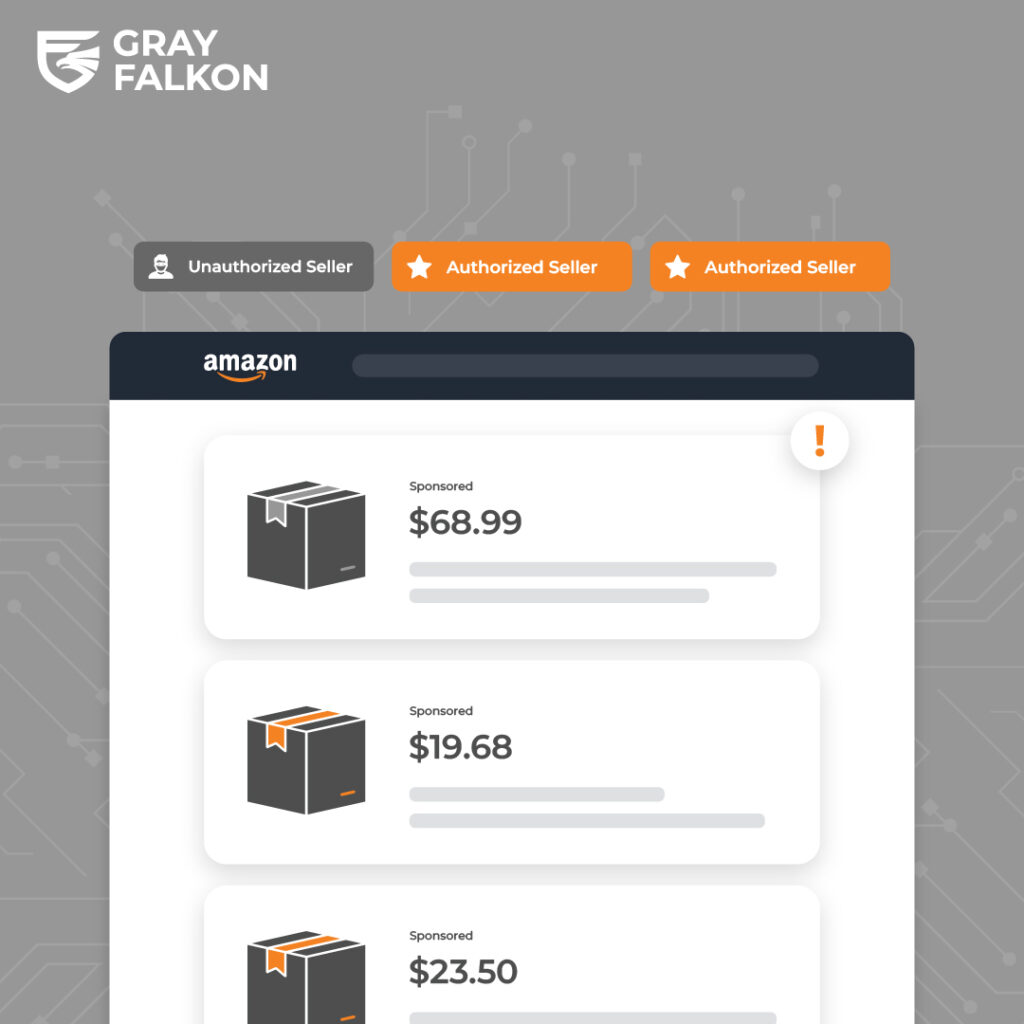
Unauthorized sellers can create significant business problems for brands on Amazon: lost Buy Box ownership, pricing instability, forecasting challenges, inefficient advertising, and inconsistent customer experiences.
But addressing unauthorized sellers raises another important question: How do you regain marketplace control without creating new legal, compliance, or reputational risk?
At Gray Falkon, that question has been part of our approach from the beginning. Two of Gray Falkon’s three founders are attorneys. That legal perspective helped shape a marketplace control methodology designed to give brands an additional guardrail as they enforce their rights and protect their brands online. The goal isn’t enforcement at any cost. It’s marketplace control built to be compliant, defensible, and protective of the brand.
Marketplace Control Should Reduce Risk — Not Create It
When a brand discovers dozens or even hundreds of unauthorized sellers, the instinct may be simple: get them off the ASIN. But there’s an important distinction.
A seller isn’t necessarily violating Amazon policy simply because a brand hasn’t authorized it to sell its products. And brands need to be thoughtful about the methods they use to address unauthorized distribution. Overly aggressive seller communications, unsupported infringement claims, or misuse of marketplace reporting mechanisms can introduce unnecessary risk.
Gray Falkon’s approach is designed to provide an additional layer of protection. We don’t circumvent marketplace rules. We work within them. Our processes have been developed and vetted with legal rigor, informed by founders who understand both the importance of protecting intellectual property and the potential risks associated with enforcement. That means examining how sellers are identified, how they are engaged, what evidence is collected, what claims are made, and how potential violations are reported to marketplaces.
An Extra Guardrail for Your Brand
Two of Gray Falkon’s three founders are attorneys, and that perspective is embedded in how our marketplace control program operates. Our processes are designed to minimize unnecessary risk while helping brands appropriately exercise and enforce their rights. That legal foundation provides an important additional guardrail. Brands aren’t left to navigate marketplace policies, seller communications, documentation, and escalation strategies on their own. Gray Falkon’s technology and team provide a structured framework designed to keep marketplace control efforts professional, compliant, evidence-based, and above board.
For brands, that should provide greater confidence in not only what is being done on their behalf, but how it’s being done.
Amazon Makes the Enforcement Decision
Another important protection is built into the process itself: Gray Falkon doesn’t make Amazon’s enforcement decisions. Amazon does.
Our role is to work on behalf of brands to identify rogue seller activity, gather relevant information and evidence, engage unauthorized sellers appropriately, and navigate established marketplace (including Amazon, Walmart, eBay, and TikTok Shop) reporting and escalation processes.
When potential policy violations are identified, they are reported through the appropriate marketplace channels.
Marketplaces, including Amazon, evaluate those reports against their own policies and determine whether enforcement action is warranted.
That distinction matters. The objective isn’t to manufacture a reason to remove a seller. It’s to identify legitimate issues and give the marketplace the information it needs to make its own enforcement decision.
Protecting More Than the Buy Box
Marketplace control isn’t only about protecting sales. It’s also about protecting the brand’s reputation. Brands have relationships with distributors, retailers, agencies, customers, marketplaces, and other stakeholders. Marketplace control tactics that are unnecessarily aggressive or poorly managed can create friction — or, in the worst cases, unwanted negative attention.
A marketplace control program should account for those risks. Gray Falkon’s approach combines technology, seller intelligence, targeted seller engagement, documentation, consumer-experience evidence when appropriate, and marketplace policy expertise to create a repeatable process brands can stand behind. With Falkon Pro, that technology is paired with a dedicated Brand Success Strategist who provides ongoing oversight, insights, and guidance.
The objective is control without unnecessary exposure.
Compliance Is Part of the Business Case
Marketplace control increasingly sits at the intersection of eCommerce, sales, finance, retail media, legal, and brand protection. That’s because unauthorized seller activity can affect much more than enforcement metrics.
Marketplace Control → Buy Box → Pricing → Forecasting → Advertising → Profitable Growth
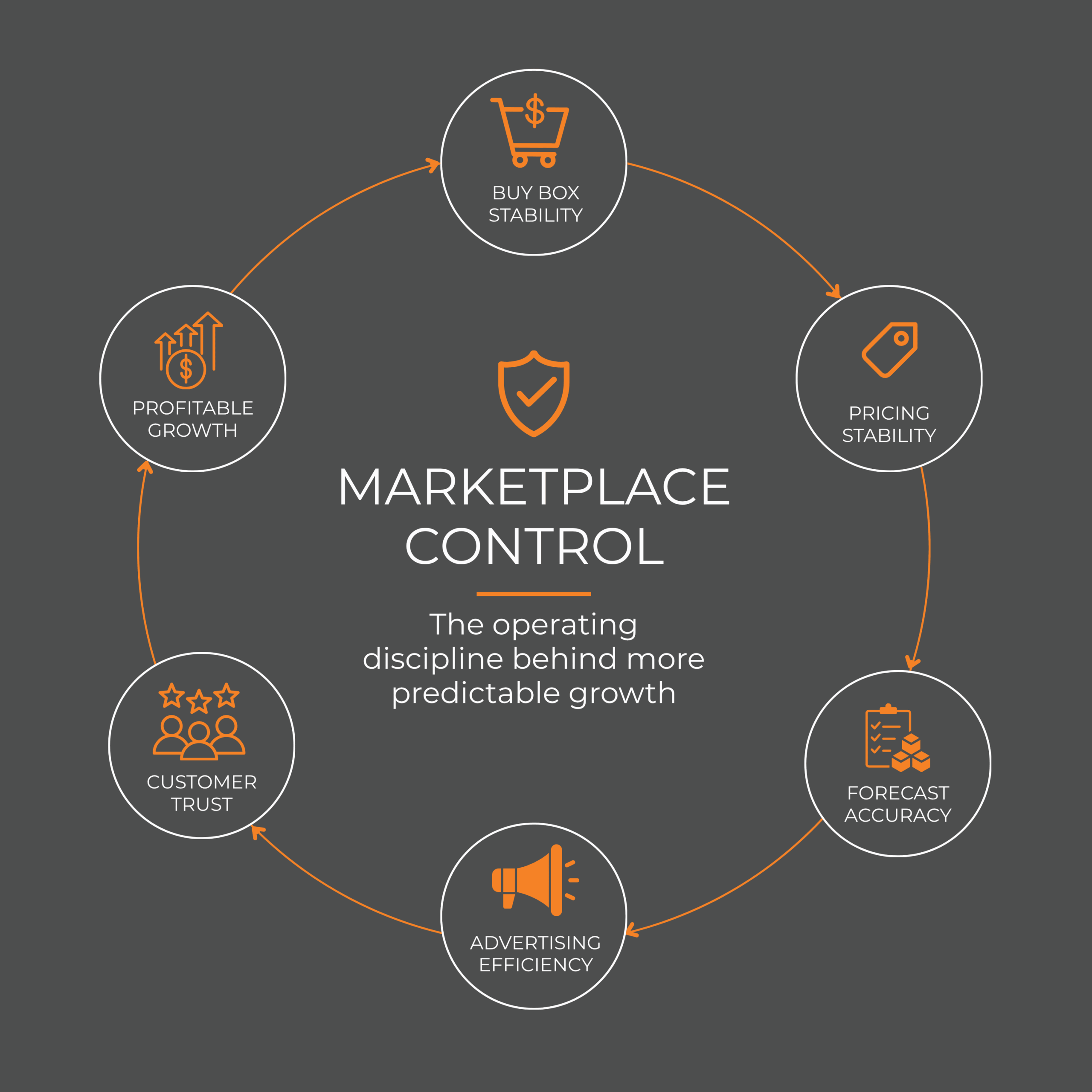
But the flywheel only works if the foundation underneath it is sound.
Brands shouldn’t improve marketplace control by introducing new legal, compliance, or reputational risks elsewhere in the organization. That’s why compliance isn’t an afterthought in Gray Falkon’s solution. It’s built into the methodology.
Protect Your Brand While Protecting Your Brand
There’s an important dual responsibility in marketplace control.
Brands need to protect their intellectual property, distribution strategy, customer experience, and marketplace performance. But they also need to protect themselves in the process.
Gray Falkon was built with that reality in mind.
With two attorneys among our three founders, our marketplace control methodology has been developed with an understanding of the rules, laws, marketplace policies, and potential risks involved in marketplace control. That perspective provides brands with an additional guardrail as they work to exercise their rights and regain control of their Amazon business. Because the best marketplace control strategy isn’t simply one that gets results. It’s one your brand can confidently stand behind.
Take Control — Without Taking Unnecessary Risk
If unauthorized sellers are affecting your Amazon business, the question isn’t just how quickly you can remove them. It’s whether you’re doing it the right way.
Gray Falkon can help you understand your current seller landscape, identify opportunities to strengthen marketplace control, and build a compliant, defensible approach to protecting your brand.
Ready to see how controlled your marketplace really is? Schedule a demo today.